14-Day Scalp Microbiome Reset: Clinical Flaking Solutions
Anúncios
A 14-Day Scalp Microbiome Reset can serve as a structured starting point for understanding scalp flaking, irritation, and daily care.
Seborrheic dermatitis affects many people, causing persistent flakes, itching, and discomfort that may require targeted dermatological treatment.
This guide explores scalp microbiome research, evidence-based treatments, practical routines, and realistic expectations for improving scalp comfort.
Understanding the Scalp Microbiome and Flaking
The scalp microbiome consists of bacteria, fungi, and other microorganisms that naturally inhabit the skin beneath your hair.
Anúncios
Changes in this environment may accompany conditions such as dandruff and seborrheic dermatitis, although their causes are complex.
A 14-Day Scalp Microbiome Reset should emphasize appropriate scalp care rather than promising to eliminate microorganisms completely.
How the Scalp Microbiome Works
Microorganisms interact with scalp oils, immune responses, and the skin barrier, contributing to a complex biological environment.
Different microbial communities can exist on healthy and irritated scalps, but identifying the exact significance of these differences requires research.
Anúncios
Maintaining scalp comfort generally involves gentle hygiene, suitable products, and appropriate treatment when an underlying condition develops.
The 14-Day Scalp Microbiome Reset: What Science Supports
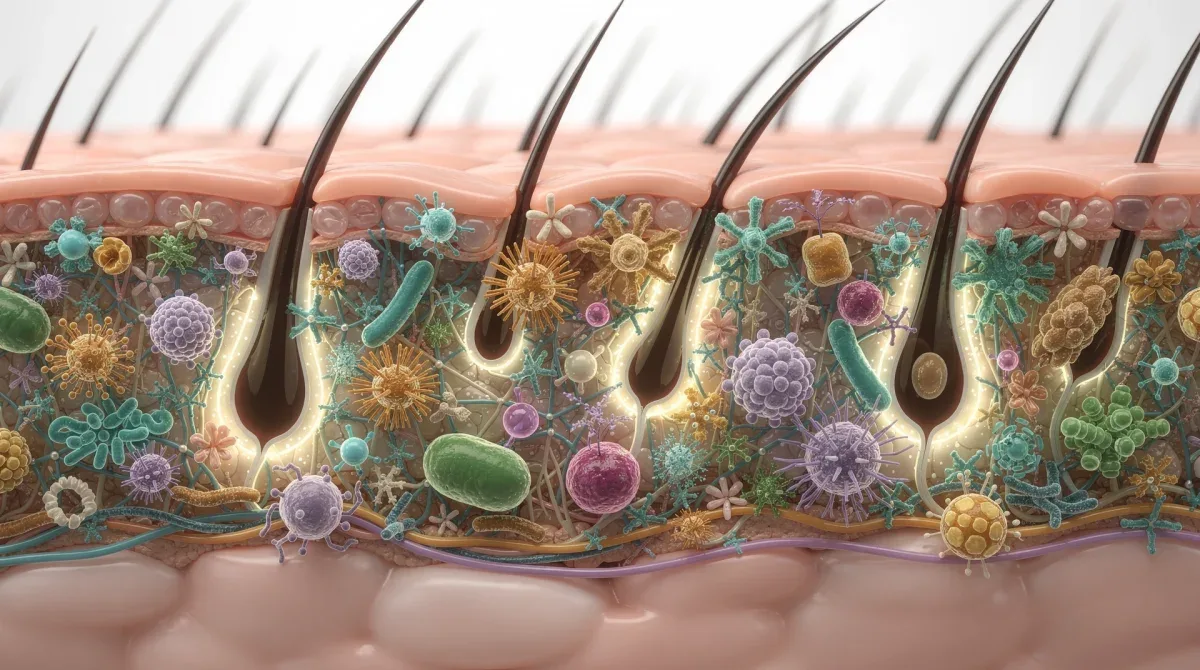
The 14-Day Scalp Microbiome Reset is best understood as an introductory care period rather than a clinically established universal treatment.
There is insufficient verified evidence that a specific two-week microbiome routine consistently reduces seborrheic flaking by 65%.
Established treatments may improve symptoms, but results depend on diagnosis, active ingredients, application frequency, and individual response.
Key Components of a Scalp Care Routine
Gentle cleansing helps remove accumulated oils, loose flakes, and styling residue without unnecessarily irritating sensitive scalp skin.
Medicated shampoos may be appropriate for dandruff or seborrheic dermatitis when selected according to professional guidance.
Consistent treatment and symptom monitoring are more meaningful than expecting a guaranteed microbiome transformation within fourteen days.
Addressing Seborrheic Flaking: The Microbial Connection
Seborrheic dermatitis is associated with inflammation and interactions involving skin oils, immune responses, and naturally occurring Malassezia yeast.
These microorganisms are commonly present on human skin, meaning their existence alone does not establish a medical problem.
A 14-Day Scalp Microbiome Reset should focus on managing symptoms rather than attempting to remove every naturally occurring microbe.
Understanding the Role of Malassezia
Malassezia species are naturally occurring yeasts that can interact with scalp oils and contribute to inflammatory responses in susceptible individuals.
Antifungal shampoos may help control seborrheic dermatitis by reducing yeast-related activity associated with irritation and visible scaling.
However, individual responses vary, and fungal activity represents only one component of this multifactorial skin condition.
Clinical Solutions and Their Impact on Scalp Health
Evidence-based scalp care frequently includes medicated shampoos containing ingredients selected for dandruff or seborrheic dermatitis management.
Dermatologists may recommend antifungal treatments, scale-reducing formulations, or prescription medications depending on symptom severity and medical history.
The 14-Day Scalp Microbiome Reset can help organize daily care, but it should not replace established clinical treatment.
Common Medicated Shampoo Ingredients
Ketoconazole is an antifungal ingredient used in certain shampoos and topical treatments for dandruff and seborrheic dermatitis.
Selenium sulfide, salicylic acid, and other approved ingredients may also appear in products designed to address scalp scaling.
Suitable choices depend on personal needs, hair characteristics, product instructions, and professional recommendations when symptoms persist.
What to Expect During the First 14 Days
The first two weeks of a scalp care routine provide an opportunity to observe itching, flaking, redness, and product tolerance.
Some people may notice early improvement, while others require a longer treatment period before meaningful symptom relief occurs.
A 14-Day Scalp Microbiome Reset should therefore emphasize realistic monitoring rather than fixed improvement percentages or guaranteed outcomes.
Days 1 to 7: Establishing Consistent Care
Begin by identifying current symptoms and reviewing whether your existing shampoo or styling products appear to cause irritation.
Use appropriate cleansing products according to their instructions, avoiding unnecessary experimentation with several new treatments simultaneously.
Record changes in itching, visible flakes, and scalp comfort to help determine whether the routine is tolerable.
Days 8 to 14: Monitoring Scalp Response
Continue the recommended routine while observing whether symptoms improve, remain unchanged, or become more uncomfortable.
Persistent redness, increasing irritation, or painful scalp changes may indicate that professional medical evaluation is appropriate.
The 14-Day Scalp Microbiome Reset should conclude with a practical assessment rather than an assumption that treatment is complete.
How Long Does Seborrheic Dermatitis Treatment Take?
Treatment timelines vary because seborrheic dermatitis may require several weeks of appropriate care before symptoms improve substantially.
The NHS describes ketoconazole shampoo treatment schedules commonly lasting two to four weeks for dandruff and seborrheic dermatitis.
Consequently, a 14-Day Scalp Microbiome Reset represents an initial period that may be shorter than a complete treatment course.
Why Two Weeks May Not Be Enough
Inflammation, scaling, and discomfort do not always resolve at the same speed, even when an appropriate treatment is used.
Hair type, scalp sensitivity, product application, and the severity of seborrheic dermatitis can influence individual responses.
Completing the recommended treatment duration is important, even when noticeable improvement begins before the course has finished.
Patient Experience and Expected Outcomes
People experiencing chronic scalp flaking often want visible improvement, reduced irritation, and a more comfortable daily hair care routine.
Appropriate treatment can help manage symptoms, although seborrheic dermatitis may recur and require ongoing maintenance strategies.
The 14-Day Scalp Microbiome Reset encourages symptom awareness without suggesting that every individual will achieve identical results.
Tracking Symptoms Without Complicated Tools
Simple observations can help identify whether scalp irritation changes during a structured care routine or after introducing products.
Consider recording the frequency of itching, noticeable flakes, redness, and discomfort using a straightforward daily journal.
These records may also provide useful context when discussing persistent symptoms or treatment responses with a dermatologist.
Maintaining Scalp Health After Two Weeks
Long-term management may involve continuing medicated shampoo at a maintenance frequency recommended by a healthcare professional.
Gentle cleansing and avoiding known irritants can help support skin comfort between episodes of seborrheic dermatitis.
A 14-Day Scalp Microbiome Reset should transition into realistic maintenance practices rather than repeated aggressive product changes.
Building a Sustainable Maintenance Routine
Choose cleansing products suited to your scalp condition, hair texture, and treatment needs rather than following universal schedules.
Reduce unnecessary exposure to irritating products, particularly when fragrances or harsh styling ingredients appear to worsen symptoms.
Recurring flaking may require renewed treatment, making professional recommendations valuable for establishing an effective long-term approach.
The Science Behind Microbiome Rebalancing
Researchers continue investigating how microbial communities interact with scalp inflammation, oil production, and visible dandruff symptoms.
Modern sequencing techniques help scientists identify bacteria and fungi associated with different scalp conditions and treatment responses.
The 14-Day Scalp Microbiome Reset reflects interest in this research, but microbiome science does not establish one universal solution.
Understanding Microbial Diversity
Healthy skin supports different microorganisms that participate in complex interactions with the local environment and human immune responses.
Researchers examine patterns of microbial diversity to understand potential associations with inflammation, dandruff, and scalp barrier function.
However, laboratory measurements do not automatically translate into personalized treatment recommendations for every individual experiencing flakes.
Prebiotics, Probiotics, and Postbiotics in Scalp Care
Some cosmetic products include ingredients marketed as prebiotics, probiotics, or postbiotics to support skin microbiome balance.
These approaches are being investigated, but evidence supporting individual formulations varies substantially across products and clinical studies.
A 14-Day Scalp Microbiome Reset should not assume these ingredients outperform established treatments for seborrheic dermatitis.
Innovative Ingredients and Formulations
Prebiotic ingredients may be designed to influence microbial activity, while probiotic-derived formulations contain components associated with microorganisms.
Postbiotic terminology can describe microbial substances or preparations, but product definitions and supporting evidence are not always consistent.
Some formulas also include peptides or soothing ingredients, although their presence does not guarantee clinical effectiveness against dandruff.
Protecting the Scalp Skin Barrier
The scalp's skin barrier helps retain moisture and protect underlying tissues from environmental irritation and other external exposures.
Repeated harsh cleansing or irritating cosmetic products may aggravate discomfort in people with sensitive or inflamed scalps.
The 14-Day Scalp Microbiome Reset should prioritize tolerability and appropriate treatment rather than frequent exfoliation or aggressive cleansing.
Choosing Gentle Scalp Products
Fragrance-free cleansers may be preferable for individuals who experience irritation after using strongly scented hair care products.
Supporting the skin barrier is important, although facial skincare routines do not necessarily translate directly into effective scalp treatments.
Product selection should consider medical needs, hair texture, personal tolerance, and any recommendations from a qualified dermatologist.
Common Mistakes During Scalp Treatment
One frequent mistake involves changing multiple products at once, making it difficult to identify which treatment helps or causes irritation.
Another involves discontinuing appropriate medicated shampoo too early because visible flakes temporarily decrease after several applications.
The 14-Day Scalp Microbiome Reset works best as a monitoring framework when product instructions and treatment duration remain consistent.
Why Overwashing Can Be Counterproductive
Washing frequency should reflect scalp condition, hair type, treatment requirements, and individual tolerance rather than rigid universal recommendations.
Excessive use of irritating products may increase dryness or discomfort, especially when the scalp is already inflamed.
Dermatologists can recommend appropriate shampoo schedules for people with straight, wavy, curly, or tightly coiled hair.
When to Consult a Dermatologist
Persistent scaling, redness, significant itching, or symptoms that do not improve with appropriate care may require professional evaluation.
Other scalp conditions can resemble seborrheic dermatitis, including psoriasis, contact dermatitis, and certain fungal infections.
A 14-Day Scalp Microbiome Reset cannot establish an accurate diagnosis or replace examination by a qualified healthcare professional.
Recognizing Symptoms That Need Attention
Pain, drainage, marked inflammation, or unusual hair loss should prompt medical evaluation rather than continued self-treatment alone.
A dermatologist can assess whether symptoms reflect seborrheic dermatitis or another condition requiring a different therapeutic approach.
Professional guidance is also useful when over-the-counter shampoos fail to improve persistent discomfort or visible scaling.
Official Dermatology Guidance for Seborrheic Dermatitis
The American Academy of Dermatology provides professional guidance describing established treatment options for seborrheic dermatitis and scalp inflammation.
Its official seborrheic dermatitis treatment guide explains medicated shampoos, prescription therapies, and ongoing symptom management.
These recommendations provide a more dependable foundation for a 14-Day Scalp Microbiome Reset than unsupported claims about fixed improvement percentages.
Why Evidence-Based Treatment Matters
Clinical treatment recommendations consider available research, diagnosed conditions, medication safety, and differences in individual patient needs.
Specific treatment schedules may vary according to symptom severity, scalp sensitivity, hair type, and underlying medical circumstances.
Following evidence-based recommendations helps avoid unrealistic expectations and reduces reliance on promotional claims without appropriate clinical support.
Understanding the Gut and Scalp Microbiome Connection
Microbiome research examines microorganisms across different body sites, including the intestines, skin, and scalp, but these ecosystems differ.
Research discussing gut microbiome changes provides broader scientific context without establishing a specific treatment for seborrheic scalp flaking.
The 14-Day Scalp Microbiome Reset should therefore distinguish preliminary microbiome concepts from established dermatological therapies.
Why Microbiome Research Needs Careful Interpretation
Microorganisms differ between body regions, so findings concerning intestinal bacteria cannot automatically explain changes in scalp health.
Diet, immune responses, skin oils, environmental exposures, and individual biology may interact in ways researchers continue investigating.
Until stronger evidence becomes available, people should avoid assuming that dietary changes alone can treat seborrheic dermatitis reliably.
Future Directions in Scalp Microbiome Research
Scientists are investigating whether changes in microbial composition can help explain differences in scalp inflammation and treatment responses.
Recent studies have examined how particular shampoos influence dandruff symptoms alongside bacterial and fungal community changes.
These findings may inform future treatments, although they do not validate every commercially advertised 14-Day Scalp Microbiome Reset.
Emerging Technologies and Treatments
Microbial sequencing allows researchers to study scalp bacteria and fungi in greater detail than traditional observation alone.
New formulations may eventually target specific biological pathways, but promising laboratory findings require appropriate clinical validation.
The future of scalp care will likely combine dermatological expertise with increasingly detailed biological research.
Creating Realistic Expectations for Scalp Improvement
A structured two-week routine can help individuals become more consistent with appropriate care and observe early changes in symptoms.
However, seborrheic dermatitis is often recurrent, and treatment may need to continue beyond the initial observation period.
The 14-Day Scalp Microbiome Reset should emphasize gradual improvement, appropriate treatment, and professional advice when symptoms persist.
Measuring Progress Beyond Visible Flakes
Scalp comfort involves more than visible dandruff, including itching, irritation, redness, and the ability to tolerate routine cleansing.
Tracking several symptoms can provide a more useful picture of treatment response than concentrating exclusively on flakes.
Individual progress may fluctuate, making longer-term observation valuable when evaluating the effectiveness of a prescribed or recommended routine.
Key Point | Brief Description |
|---|---|
Scalp Microbiome | Includes naturally occurring microorganisms interacting with scalp oils, skin function, and immune responses. |
14-Day Routine | Can provide an initial observation period but does not guarantee complete symptom control. |
65% Reduction Claim | No verified evidence establishes this percentage as a universal outcome of a two-week microbiome reset. |
Established Treatments | Medicated shampoos and dermatologist-directed therapies may help control seborrheic dermatitis. |
Treatment Duration | Some common treatment schedules last two to four weeks, with maintenance care when appropriate. |
Professional Evaluation | Persistent, painful, or worsening symptoms may require examination by a dermatologist. |
Frequently Asked Questions About Scalp Microbiome Reset
What exactly is the 14-Day Scalp Microbiome Reset?
The 14-Day Scalp Microbiome Reset is a term used to describe a structured two-week approach to scalp care. It is not a universally established medical protocol, and treatment should follow evidence-based recommendations for the specific scalp condition.
Can a scalp microbiome reset reduce flaking by 65%?
No reliable evidence confirms that a particular fourteen-day protocol consistently reduces seborrheic flaking by 65%. Results vary according to diagnosis, treatment, individual response, and the duration of therapy.
What causes seborrheic flaking?
Seborrheic dermatitis involves interactions among skin oils, inflammatory responses, and naturally occurring microorganisms such as Malassezia yeast. Its development is complex and cannot be explained by a single microbial imbalance.
Which shampoos are commonly used for seborrheic dermatitis?
Dermatologists may recommend shampoos containing ingredients such as ketoconazole, selenium sulfide, or other appropriate dandruff treatments. Product selection and application frequency depend on individual needs and medical guidance.
How long does scalp treatment usually take?
Some commonly used treatments require two to four weeks before symptoms improve sufficiently. People with recurring seborrheic dermatitis may also need an ongoing maintenance routine recommended by a healthcare professional.
Are probiotics necessary for scalp health?
There is not enough evidence to conclude that topical probiotics are necessary for everyone experiencing dandruff or seborrheic dermatitis. Research continues, but established medical treatments remain important.
Can a microbiome reset cure seborrheic dermatitis?
Seborrheic dermatitis is commonly a recurring condition that can often be managed with appropriate treatment. A two-week care routine should not be considered a guaranteed cure or permanent solution.
Should I stop medicated shampoo after fourteen days?
Not automatically. Treatment duration depends on the active ingredient and medical instructions. Some regimens last longer, while others require maintenance use to help control recurring symptoms.
What should I do if scalp irritation becomes worse?
Stop using any new product that appears to cause irritation and seek guidance from a healthcare professional. Pain, drainage, marked inflammation, or unusual hair loss warrants prompt evaluation.
Can diet alone restore the scalp microbiome?
No specific diet has been established as a reliable standalone treatment for seborrheic dermatitis. General nutrition supports overall health, but scalp conditions may require appropriate topical or prescription treatment.
How can I maintain improvements over time?
Use appropriate scalp products, follow treatment instructions, avoid known irritants, and seek professional guidance if symptoms return. Consistent care can help manage recurring flaking and discomfort.
Perspectives: A Practical Approach to Scalp Health
The 14-Day Scalp Microbiome Reset can encourage better scalp care habits, but its benefits should not be exaggerated through unsupported clinical claims.
Established dandruff treatments, gentle hygiene, and appropriate medical guidance provide a stronger foundation for managing seborrheic dermatitis.
Understanding individual symptoms and following evidence-based recommendations can support realistic improvement and more effective long-term scalp management.