Top 4 Peptides Replacing Traditional Injections in 2026
Anúncios
Latest developments on topical peptides for wrinkles in 2026 show growing scientific interest in ingredients such as acetyl hexapeptide-8, palmitoylated signal peptides, copper peptides, and other biomimetic compounds.
Current evidence suggests that some peptide-containing formulations can improve the appearance of fine lines, hydration, elasticity, or skin texture, but the results vary by peptide, concentration, formulation, study design, and duration.
Topical peptides should therefore be viewed as cosmetic or skin-care tools with potential benefits rather than proven replacements for injectable botulinum toxin or dermal fillers.
The Rise of Peptides in Anti-Aging Skincare
Peptides are short chains of amino acids, and some are designed to mimic biological signals involved in skin structure, repair, hydration, or extracellular-matrix activity.
Anúncios
Cosmetic researchers have developed many peptide ingredients intended to influence the appearance of aging skin, including signaling peptides, carrier peptides, and compounds designed to imitate aspects of neurotransmitter-related pathways.
The scientific evidence is promising in selected formulations, but laboratory activity does not automatically mean that a topical product will penetrate deeply enough or produce the same effect in human skin.
How Cosmetic Peptides May Work
Some peptides are studied for their ability to influence collagen-related pathways or other components of the extracellular matrix in laboratory models.
Others, including acetyl hexapeptide-8, have been marketed around a proposed neurotransmitter-related mechanism, although effective penetration through the skin remains an important limitation.
Anúncios
Because formulations differ significantly, results observed with one serum or experimental preparation cannot automatically be applied to every product containing the same named peptide.
Why Peptides Are Gaining Attention
Topical peptides appeal to consumers because they can be incorporated into ordinary skin-care routines without injections or procedural downtime.
They may also be combined with moisturizers, niacinamide, antioxidants, or other ingredients that can influence the overall appearance and condition of the skin.
Their increasing popularity should nevertheless be separated from claims that they provide injectable-level muscle relaxation, filler-like volume, or guaranteed wrinkle reduction.
Topical application: Can be incorporated into a regular skin-care routine.
Multiple peptide classes: Different compounds are studied for different biological pathways.
Variable evidence: Clinical support differs considerably among ingredients and formulations.
No universal injection replacement: Current evidence does not establish equivalence to approved injectables.
Four Peptide Categories Frequently Discussed in 2026
Several peptide ingredients appear repeatedly in anti-aging products and scientific discussions, but their levels of clinical evidence are not equal.
Acetyl hexapeptide-8, palmitoylated signal peptides, GHK-Cu, and SNAP-8 are useful examples for understanding both the possibilities and the limitations of topical peptide technology.
They should not be ranked as proven injectable replacements because direct head-to-head clinical evidence against FDA-approved injectable treatments is lacking.
Acetyl Hexapeptide-8: Commonly Known as Argireline
Acetyl hexapeptide-8 is frequently marketed as a “Botox-like” cosmetic peptide because laboratory research suggests possible effects on pathways related to neurotransmitter release.
Clinical and preclinical studies have reported improvements in wrinkle appearance in some formulations, including a 2026 study of a multi-ingredient serum containing acetyl hexapeptide-8.
However, reviews emphasize that its relatively large, hydrophilic structure limits skin penetration, and its ability to reach neuromuscular junctions after ordinary topical application remains uncertain.
Palmitoylated Signal Peptides and Matrixyl-Type Ingredients
Palmitoylated peptides have been studied for their potential to support extracellular-matrix signaling and improve the appearance of photoaged skin.
A randomized, double-blind, split-face clinical study of palmitoyl pentapeptide found improvements in fine lines and wrinkles compared with the vehicle moisturizer after 12 weeks.
This provides meaningful evidence for selected signal peptides, but the results do not establish that every Matrixyl-branded or related formulation will produce identical effects.
GHK-Cu: Copper Peptides
GHK-Cu has attracted attention because laboratory and preclinical research suggests effects involving extracellular-matrix synthesis, inflammation, cellular repair, and tissue regeneration.
A 2026 systematic review found a biological rationale and some positive clinical findings, but most of the included evidence was preclinical and only a small number of randomized clinical trials were available.
Current research therefore supports continued study of copper peptides while also highlighting the need for larger, standardized human trials before making strong anti-wrinkle claims.
SNAP-8 and Other Neurotransmitter-Inspired Peptides
SNAP-8 is another synthetic peptide marketed for the appearance of expression lines and is conceptually related to other neurotransmitter-inspired cosmetic peptides.
Laboratory mechanisms may be scientifically interesting, but robust independent human evidence for topical SNAP-8 remains more limited than marketing language can suggest.
It should therefore be described as an experimental or cosmetic anti-wrinkle ingredient rather than a proven topical substitute for injectable neuromodulators.
What the Clinical Evidence Actually Shows
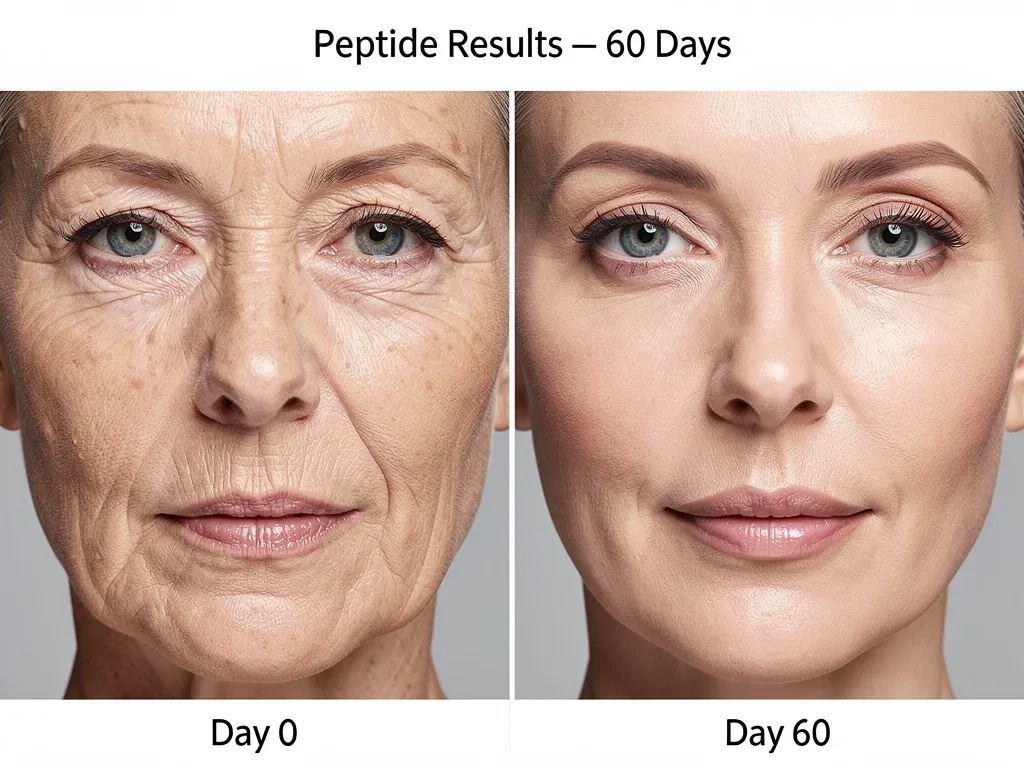
The strongest current evidence does not support one universal claim that peptide products reduce wrinkles by a predictable amount within 60 days.
Studies vary from several weeks to several months and use different ingredients, concentrations, vehicles, populations, imaging systems, and outcome measurements.
The most scientifically accurate conclusion is that some peptide-containing products have demonstrated measurable improvements, while the magnitude and reproducibility of those improvements remain formulation-specific.
In Vitro and Ex Vivo Evidence
In vitro studies can show whether a peptide influences cultured cells, collagen-related biomarkers, enzymes, or other biological pathways under controlled conditions.
Ex vivo skin models add greater complexity by examining activity or penetration in isolated skin tissue, but they still do not reproduce every aspect of real-world topical use.
These studies are useful for screening potential ingredients, yet they cannot by themselves prove that a consumer product will visibly reduce wrinkles in humans.
Human Clinical Studies
Human trials provide more relevant evidence when they use control groups, randomization, validated imaging, blinded assessments, and well-defined formulations.
A 2026 systematic review and meta-analysis of 19 randomized trials found an overall modest effect of peptide interventions on wrinkle reduction, with stronger pooled findings for some other skin outcomes.
That evidence supports cautious optimism around peptides while falling short of demonstrating effects equivalent to injectable neurotoxins or fillers.
Study design matters: Randomized controlled trials provide stronger evidence than before-and-after marketing photographs.
Formula matters: Results from a multi-ingredient serum cannot be attributed automatically to one peptide.
Duration varies: Studies do not establish a universal 60-day response.
Effect size matters: Statistical improvement does not necessarily mean dramatic visible transformation.
Why “60-Day Wrinkle Reduction” Needs Context
Sixty days is a convenient marketing timeframe, but it is not a scientifically standardized period for evaluating all cosmetic peptides.
Some trials last eight weeks, others 12 weeks or longer, and improvements may be measured with photography, wrinkle scales, three-dimensional imaging, hydration instruments, or participant questionnaires.
A product should therefore disclose the specific study supporting a time-based claim rather than implying that every peptide routinely produces a predictable result within two months.
Percentage Improvements Can Be Misleading
A percentage improvement may describe a clinical grading scale, imaging parameter, wrinkle volume, or another measurement rather than a literal percentage reduction visible to the naked eye.
Results can also be influenced by moisturization, lighting, baseline wrinkle severity, and other active ingredients present in the same formulation.
Consumers should examine what was actually measured before interpreting a numerical wrinkle claim as a guaranteed cosmetic outcome.
Peptides vs. Botulinum Toxin Injections
FDA-approved botulinum toxin products are injectable drugs that temporarily reduce the appearance of certain facial lines by preventing targeted muscles from tightening.
Topical peptides do not have the same route of administration, approved indications, dose control, or level of evidence for producing neuromuscular effects.
Calling a topical peptide “Botox in a bottle” can therefore exaggerate what existing clinical evidence demonstrates.
Mechanism and Delivery Are Fundamentally Different
Botulinum toxin is injected directly into targeted tissue, allowing a clinician to control placement and dose with substantially different pharmacologic exposure.
A topical peptide first has to remain stable in its formulation and then cross the skin barrier in sufficient amounts to reach the intended biological target.
That delivery challenge is one reason laboratory mechanisms cannot automatically be translated into injectable-like outcomes.
Peptides vs. Dermal Fillers
Dermal fillers are injectable medical products used to add volume or alter contours in approved anatomical areas, depending on the specific product.
Topical peptides do not physically replace lost volume in the same manner and should not be presented as providing the same structural correction.
They may improve skin texture, hydration, or the appearance of fine lines in some users, but that is a different outcome from filler-based augmentation.
Different Goals Require Different Treatments
Someone concerned mainly with surface texture and fine lines may have different treatment goals from someone seeking correction of volume loss or deep dynamic wrinkles.
Topical skin care, prescription treatments, energy-based procedures, injectables, and surgical options each address different aspects of facial aging.
A qualified dermatologist or other appropriately licensed clinician can help determine which approach matches a person's concerns, medical history, and expectations.
Safety and Consumer Expectations
Topical peptide products generally avoid injection-related risks such as bruising at the injection site, but they are not automatically free from irritation or other adverse reactions.
Formulations contain multiple ingredients, and fragrances, preservatives, solvents, or other active compounds may contribute to sensitivity even when the peptide itself is well tolerated.
Patch testing a new product and discontinuing use if significant irritation develops are reasonable precautions for cosmetic skin care.
Acetyl Hexapeptide-8 Safety Has Concentration Limits
A 2025 Cosmetic Ingredient Review safety assessment concluded that acetyl hexapeptide-8 amide was safe under reported cosmetic practices at concentrations up to 0.005%.
The same assessment found that available information was insufficient to determine safety at concentrations above 0.005% under intended cosmetic use.
This is another reason consumers should avoid assuming that a higher peptide concentration automatically produces better or safer results.
Long-Term Skin Health and Realistic Benefits
Peptide products may contribute to a broader skincare routine, but they should not displace more established preventive measures.
Daily sun protection remains particularly important because cumulative ultraviolet exposure is a major contributor to premature skin aging and visible wrinkles.
A practical routine can combine appropriate cleansing, moisturization, sun protection, and well-tolerated active ingredients based on individual skin needs.
Do Not Assume Every Peptide Has the Same Benefits
Claims such as improved collagen, reduced inflammation, barrier strengthening, and increased hydration may apply differently depending on the individual peptide and formulation.
A biological effect reported in cultured cells does not automatically prove a clinically meaningful improvement in human skin.
Product-specific evidence is therefore more useful than relying on the word “peptide” alone as a guarantee of efficacy.
Delivery Systems Remain an Important Research Area
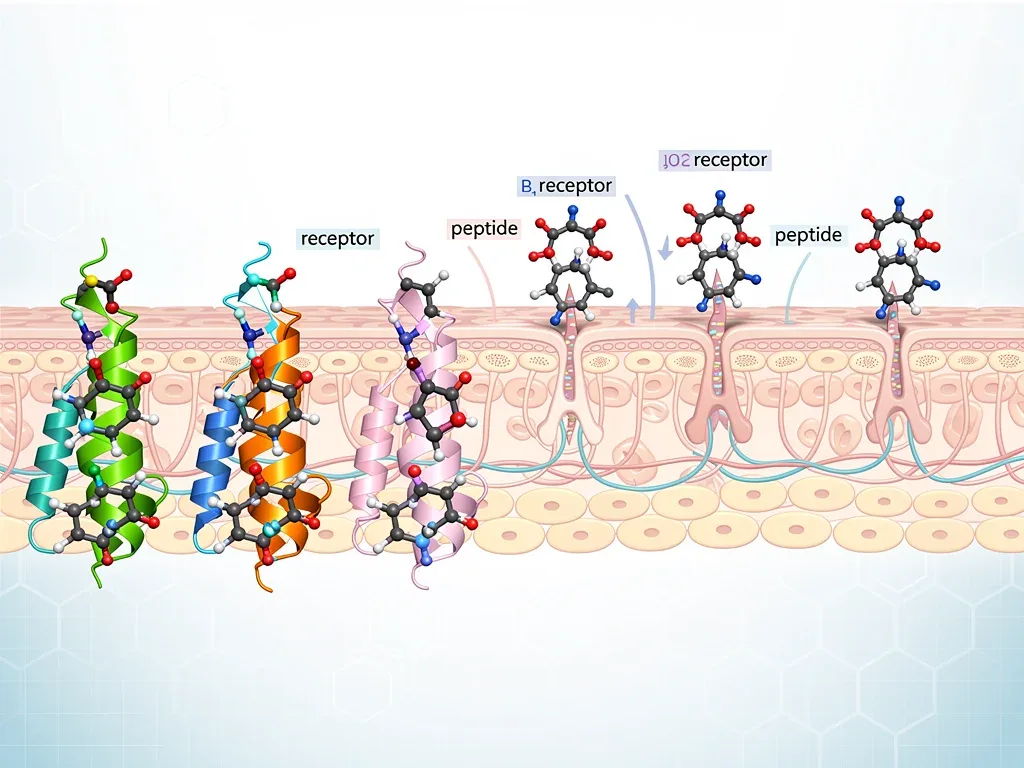
Skin penetration is one of the central challenges in topical peptide development because many peptides are relatively large, water-soluble molecules.
Researchers are investigating emulsions, liposomes, microneedle systems, chemical modifications, and other approaches designed to improve stability and delivery.
Improved delivery could increase biological activity, but it may also move products closer to regulatory questions involving drugs or medical devices depending on their intended claims and mechanism.
Microneedles Are Not the Same as Ordinary Topical Application
Clinical research has evaluated dissolving microneedle patches containing acetyl hexapeptide-8 and other ingredients for facial wrinkles.
Microneedles create temporary pathways through the outer skin barrier, so their delivery profile differs materially from applying a cream or serum to intact skin.
Results from microneedle studies therefore should not be presented as proof that conventional topical peptide products achieve the same penetration or outcome.
Encapsulation: May improve peptide stability or delivery depending on the formulation.
Liposomes: Are being studied as carriers for selected active compounds.
Microneedles: Alter the skin barrier and should be considered separately from ordinary cosmetics.
Formulation chemistry: Can strongly influence whether a peptide remains stable and reaches its target.
FDA Regulation and Anti-Wrinkle Claims
In the United States, the legal classification of a skin-care product depends partly on what the manufacturer claims the product is intended to do.
FDA explains that a product intended simply to moisturize or make lines look less noticeable can be a cosmetic, while claims to alter skin structure, stimulate collagen production, or otherwise affect body function can cause a product to be regulated as a drug or device.
This distinction is important when evaluating aggressive marketing statements about peptide products supposedly rebuilding tissue, relaxing muscles, or replacing injectable treatments.
“Cosmeceutical” Is Not a Legal FDA Category
The term “cosmeceutical” is commonly used in the beauty industry, but FDA does not recognize it as a separate legal product category.
A product can be a cosmetic, a drug, or both depending on its intended use and claims rather than on the marketing label applied to it.
Consumers should therefore be cautious when scientific-sounding terminology is used to imply regulatory approval or clinically proven drug-like effects.
Comparing the Four Frequently Discussed Peptides
The four ingredients discussed in this article differ in mechanism, evidence quality, clinical data, and formulation challenges.
None has sufficient evidence to support a blanket statement that it replaces botulinum toxin injections or dermal fillers in 2026.
The more useful comparison is how much clinical evidence exists for each ingredient and how closely product claims reflect that evidence.
Peptide | Current Evidence Context |
|---|---|
Acetyl Hexapeptide-8 | Some clinical evidence for wrinkle appearance, but topical penetration and neuromuscular action remain uncertain. |
Palmitoylated Signal Peptides | Selected controlled studies support improvements in photoaged skin and fine lines, with results dependent on formulation. |
GHK-Cu | Strong preclinical interest and limited encouraging clinical evidence, but larger standardized human trials are still needed. |
SNAP-8 | Interesting proposed mechanism but comparatively limited independent clinical evidence for topical wrinkle treatment. |
The Role of Clinical Data in Future Peptide Research
The future of peptide skin care will depend on larger, independently replicated trials using standardized formulations and objective outcome measurements.
Studies should also separate the effect of the peptide from moisturizers, niacinamide, acids, antioxidants, or other active ingredients included in the same formula.
Without that distinction, improvements from a finished product cannot reliably be attributed to the peptide alone.
Why Independent Research Matters
Industry-sponsored studies can contribute useful evidence, but replication by independent investigators helps determine whether findings are reproducible.
Researchers also need to report peptide concentration, delivery system, comparator, study duration, participant characteristics, and adverse events clearly.
That level of transparency makes it easier for clinicians and consumers to distinguish meaningful evidence from marketing-oriented claims.
Future Research Priorities
Future studies are likely to focus on better delivery systems, formulation stability, combination therapies, and determining which peptide sequences have reproducible clinical effects.
Researchers also need direct comparative trials to establish whether any topical peptide can meaningfully approach the outcomes of existing prescription or procedural treatments.
Until those trials exist, claims of injectable equivalence should remain cautious and specific rather than being treated as an established scientific conclusion.
Larger randomized trials: Needed for more reliable estimates of efficacy.
Standardized formulations: Essential for comparing studies.
Independent replication: Helps confirm manufacturer-sponsored findings.
Long-term safety data: Important for repeated cosmetic use.
Consumer Protection and Product Selection
Consumers should look for products that identify the peptide clearly, provide complete ingredient lists, and avoid making unsupported medical promises.
Product-specific clinical evidence is more informative than general claims that an ingredient is “clinically proven” based on unrelated laboratory research.
Price, concentration, packaging, formulation stability, and tolerability can all influence whether a peptide product is worth incorporating into a routine.
Questions to Ask Before Buying
Check whether the manufacturer cites an actual human study performed on the finished product or merely references general research about the ingredient.
Look at how long participants used the product, how wrinkles were measured, whether there was a control group, and whether the study was independently reviewed.
Be skeptical of claims promising injectable-equivalent effects, guaranteed percentages, instant collagen rebuilding, or fixed wrinkle reductions without accessible supporting evidence.
Is the exact peptide identified?
Was the finished formulation studied in humans?
Was there a placebo or comparison group?
Are the results and limitations publicly available?
Frequently Asked Questions About Peptides and Anti-Aging
Can topical peptides replace Botox or dermal fillers? ▼
Current evidence does not establish topical peptides as equivalent replacements for FDA-approved botulinum toxin products or dermal fillers. They may improve the appearance of fine lines or skin quality in some formulations, but the treatments work differently.
Are 60-day wrinkle reductions scientifically guaranteed? ▼
No. Some studies lasting approximately eight weeks or longer report improvements, but there is no universal 60-day wrinkle-reduction effect that applies to every peptide or product.
Does Argireline work like Botox? ▼
Acetyl hexapeptide-8 has a proposed neurotransmitter-related mechanism, but current reviews note limited skin penetration and uncertainty about whether ordinary topical use reaches neuromuscular junctions sufficiently to reproduce injectable botulinum toxin effects.
Does Matrixyl have clinical evidence? ▼
Selected palmitoylated signal peptides have been studied in controlled trials and have shown improvements in fine lines and photoaged skin, but results depend on the exact formulation and cannot be generalized to every product using a Matrixyl-related name.
Are copper peptides proven for wrinkles? ▼
GHK-Cu has promising preclinical evidence and some limited clinical findings, but recent reviews emphasize that larger and better-standardized clinical trials are still needed.
Looking Ahead
The development of topical peptides remains one of the more interesting areas of cosmetic science in 2026, with growing research into acetyl hexapeptide-8, signal peptides, copper peptides, and advanced delivery systems.
The evidence supports potential improvements in selected skin-aging outcomes, but it does not support describing these ingredients collectively as replacements for traditional injections or promising universal 60-day wrinkle reductions.
Consumers will benefit most from treating peptide skin care as one possible component of an evidence-informed routine while evaluating product-specific research, realistic claims, sun protection, tolerability, and professional guidance when stronger aesthetic treatments are being considered.