Upgrading Your Anti-Aging Regimen: Matrixyl 3000 & Argireline
Anúncios
Latest developments on Matrixyl 3000 and Argireline in 2026 show promising cosmetic research around wrinkles and skin appearance, but current evidence does not establish that a 1% Matrixyl 3000 formulation paired with Argireline reliably boosts skin elasticity within exactly 28 days.
A published 28-day clinical study did evaluate a multi-peptide eye serum containing Matrixyl 3000 and Argireline, but the formula also contained Eyeliss and numerous other active and supporting ingredients.
The study reported statistically significant improvements in several wrinkle measurements, while objective changes in skin elasticity and firmness were small and not statistically significant, making the original elasticity claim too strong.
The Science Behind Matrixyl 3000 and Argireline
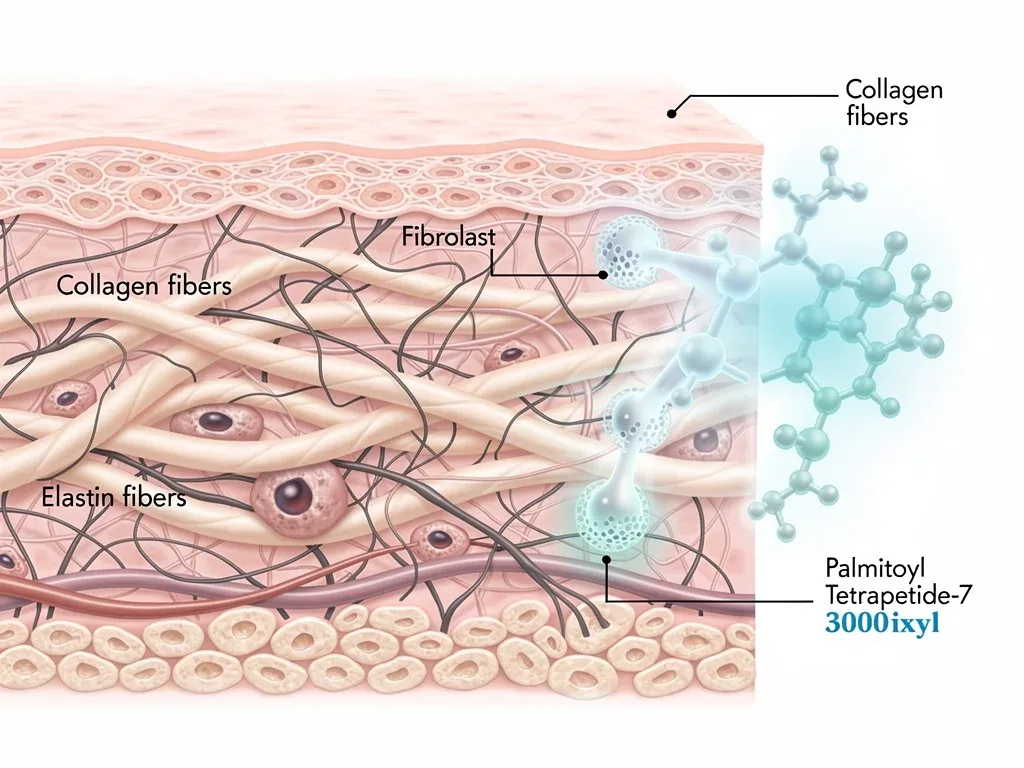
Matrixyl 3000 is a proprietary peptide blend based on palmitoyl tripeptide-1 and palmitoyl tetrapeptide-7, ingredients studied for their potential effects on extracellular-matrix signaling and the appearance of aging skin.
Anúncios
Argireline is a trade name associated with acetyl hexapeptide-8, a biomimetic peptide studied for a proposed interaction with pathways involved in neurotransmitter release.
Both ingredients have biological rationales and some cosmetic evidence, but claims about synergy, collagen production, muscle relaxation, or fixed timelines should reflect the exact formulation and clinical study being discussed.
Understanding Matrixyl 3000
Matrixyl 3000 combines palmitoyl tripeptide-1 and palmitoyl tetrapeptide-7, two peptides commonly used in anti-aging cosmetic formulations.
Laboratory research suggests that palmitoylated signaling peptides may influence pathways associated with extracellular-matrix components, including collagen-related activity.
Anúncios
Human studies of formulations containing these peptides have reported improvements in wrinkles or skin appearance, but many trials test finished multi-ingredient products rather than Matrixyl 3000 in isolation.
What Clinical Evidence Exists for Matrixyl 3000
An older study summarized by the Cosmetic Ingredient Review involved 24 subjects applying a cream containing Matrixyl 3000 twice daily for approximately two months.
The study reported reductions in deep wrinkles and skin roughness along with improvements in elasticity and tone, although the available evidence base is relatively small.
This supports continued interest in the ingredient, but it does not establish that a 1% concentration produces a predictable elasticity improvement within 28 days.
What Argireline Actually Does
Acetyl hexapeptide-8, commonly known as Argireline, was developed around a proposed mechanism involving components of the SNARE complex associated with neurotransmitter release.
This mechanism has contributed to its frequent description as a “Botox-like” peptide, but that description can exaggerate the evidence when applied to conventional topical products.
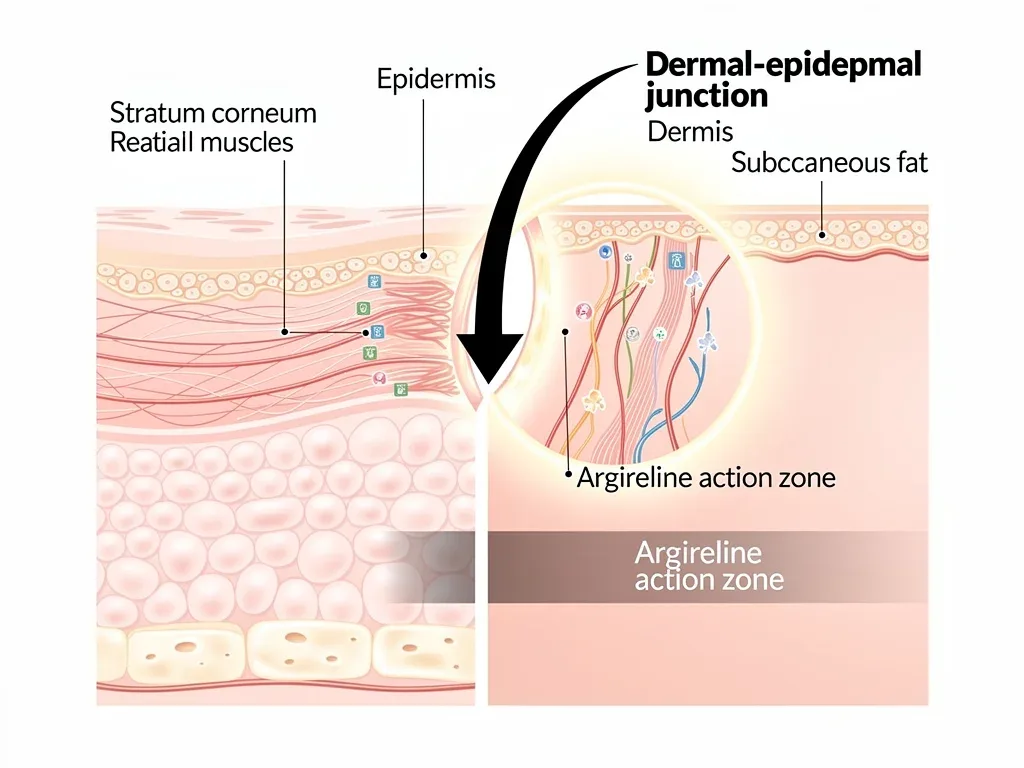
A 2025 scientific review concluded that acetyl hexapeptide-8 has limited permeability through the stratum corneum and that its ability to reach neuromuscular junctions after topical application remains uncertain.
Argireline Is Not the Same as Injectable Botulinum Toxin
Botulinum toxin is injected directly into targeted tissue at a controlled dose, while a topical cosmetic peptide must first cross the skin barrier before reaching deeper biological targets.
That difference in delivery is important because acetyl hexapeptide-8 is relatively large and hydrophilic, characteristics that make passive penetration through intact skin difficult.
Argireline may still contribute to cosmetic improvements in some formulations, but topical use should not be presented as equivalent to injectable neuromodulator treatment.
What the 28-Day Study Actually Tested
A 2023 clinical study evaluated a commercially available multi-peptide eye serum in 32 women who completed twice-daily application for 28 days.
The serum contained 10% Argireline®, 4% Matrixyl® 3000, and 2% Eyeliss™, together with caffeine, soluble collagen, carnosine, panthenol, idebenone, ceramide, botanical ingredients, and other formulation components.
Because there was no separate treatment group using only Matrixyl 3000 plus Argireline, the study cannot determine how much of the observed effect came specifically from those two ingredients.
The Wrinkle Results Were More Convincing Than the Elasticity Results
After 28 days, the study reported a 33.29% reduction in measured wrinkle number, an 18.06% reduction in wrinkle length, and a 12.69% reduction in wrinkle volume compared with baseline.
Those wrinkle-related changes were statistically significant, although the study was small, lacked a placebo control, involved women aged 20 to 45, and tested one finished commercial formulation.
The findings therefore support potential cosmetic anti-wrinkle effects from the serum but should not be generalized automatically to every Matrixyl 3000 or Argireline product.
The Elasticity Claim Was Not Confirmed
The same study measured objective skin elasticity using a Cutometer and reported only a 1.23% increase in the R2 elasticity parameter after 28 days.
That change was not statistically significant, with a reported p-value of 0.553, and the researchers explicitly stated that no significant change in skin elasticity was observed.
This means the study cannot support a headline claiming that Matrixyl 3000 and Argireline were clinically proven to boost elasticity within 28 days.
Why “1% Matrixyl 3000” Is Not Supported by This Study
The original article repeatedly refers to a 1% Matrixyl 3000 concentration, but the relevant 28-day clinical study did not use that formulation.
The researchers reported a product containing 4% Matrixyl 3000 as a supplied proprietary ingredient mixture, together with 10% Argireline and additional actives.
Without a controlled clinical trial testing a defined 1% Matrixyl 3000 formulation, it is not scientifically appropriate to claim that 1% is a validated threshold for 28-day elasticity improvement.
Ingredient Percentage Can Be Misleading
Commercial peptide ingredients are often supplied as mixtures containing water, solvents, stabilizers, or very small amounts of the actual peptide.
A label stating “4% Matrixyl 3000” therefore does not necessarily mean that 4% of the finished formula consists of pure palmitoyl tripeptide-1 and palmitoyl tetrapeptide-7.
When comparing formulas, consumers should distinguish between the percentage of a branded raw-material blend and the actual concentration of the active peptide molecules.
Can Matrixyl 3000 and Argireline Be Synergistic?
The two ingredient classes target different proposed biological pathways, so combining them is scientifically plausible as a multi-target cosmetic strategy.
Palmitoylated signal peptides are generally studied in connection with extracellular-matrix pathways, while acetyl hexapeptide-8 is researched for a proposed neurotransmitter-related mechanism.
However, there is insufficient controlled evidence showing that their combination produces a specific synergistic effect greater than either ingredient alone.
What Would Be Needed to Prove Synergy
A robust synergy trial would ideally compare Matrixyl 3000 alone, Argireline alone, the combination, and a placebo or vehicle under otherwise identical conditions.
Researchers would also need standardized concentrations, sufficient participants, blinded outcome assessment, and objective measurements of wrinkles and elasticity.
Without this type of design, improvements from a combined product cannot be attributed confidently to synergy between two named ingredients.
Objective Measurements Matter
Clinical skincare studies often use instruments rather than relying solely on photographs or participant impressions.
In the 28-day multi-peptide study, wrinkle characteristics were assessed using PRIMOS imaging, while skin elasticity was evaluated with a Cutometer.
This distinction matters because participants may perceive improvements even when instrument-measured changes do not reach statistical significance.
Subjective and Objective Results Can Differ
In the 28-day study, many participants reported that their skin looked smoother, firmer, or more elastic after using the serum.
However, the instrument-measured elasticity parameter did not improve significantly, demonstrating the difference between subjective satisfaction and an objective physical measurement.
Both types of information can be useful, but subjective reports should not be presented as proof of a measurable biological change.
Integrating Peptides Into a Skincare Routine
Peptide-containing products can be incorporated into a broader skincare routine when they are well tolerated and appropriate for the user's goals.
Serums are generally applied according to the manufacturer's instructions before heavier moisturizers, although there is no universal rule that every peptide product must be used twice daily.
Consistency may matter for cosmetic results, but recommended frequency should come from the specific formulation rather than from a blanket rule applied to every peptide ingredient.
Sun Protection Remains More Established
Ultraviolet exposure is a major contributor to premature skin aging, collagen degradation, pigmentation changes, and visible wrinkles.
Broad-spectrum sunscreen, appropriate sun avoidance, and protective clothing have a much stronger evidence base for preventing photoaging than relying on cosmetic peptides alone.
Peptides can therefore be viewed as optional adjuncts rather than replacements for established preventive skincare measures.
Follow the product instructions: Concentrations and formulations vary.
Use moisturizer when needed: Maintaining the skin barrier can improve comfort and appearance.
Use sun protection: UV prevention remains central to managing photoaging.
Introduce products gradually: Stop use if significant irritation develops.
Can Peptides Be Used with Retinoids or Vitamin C?
There is no universal scientific rule requiring Matrixyl 3000 or acetyl hexapeptide-8 to be separated from retinoids, vitamin C, niacinamide, or hyaluronic acid.
Compatibility depends on the entire formulation, skin sensitivity, pH, preservatives, solvents, and how many potentially irritating products are being used at once.
People with sensitive skin may benefit from introducing one new product at a time rather than combining several active formulations immediately.
Formulation Matters More Than Ingredient Lists Alone
Two products containing the same peptide can perform differently because delivery systems, solvents, emollients, stabilizers, and packaging influence stability and skin exposure.
Ingredient concentration alone also cannot predict efficacy when penetration through the skin barrier is a limiting factor.
Finished-product clinical evidence is therefore often more informative than assuming that the presence of a recognizable peptide guarantees a particular result.
Safety and Concentration Require Context
Acetyl hexapeptide-8 is widely used in cosmetic formulations, but concentration claims require more caution than the original article suggests.
The Cosmetic Ingredient Review concluded that acetyl hexapeptide-8 amide was safe under the evaluated cosmetic conditions at concentrations up to 0.005% and found available safety data insufficient for higher concentrations.
This does not mean every commercial percentage on a branded Argireline raw material corresponds directly to the same percentage of pure acetyl hexapeptide-8 in the final product.
Higher Percentage Does Not Automatically Mean Better Results
More active ingredient does not always improve penetration, biological effect, tolerability, or product stability.
Cosmetic efficacy depends on delivery, formulation design, application site, frequency, and the characteristics of the person using the product.
Consumers should therefore avoid judging peptide products solely by the largest percentage printed in marketing materials.
Managing Expectations Around 28 Days
Twenty-eight days is a common cosmetic-study duration, but it is not a universal biological deadline for visible skin improvement.
Some studies have detected changes in wrinkles within four weeks, while other peptide-containing formulations have been evaluated over eight, 12, or 16 weeks.
Individual response also varies according to baseline skin condition, age, sun exposure, product formulation, and other skincare used simultaneously.
Longer Studies Often Provide Better Context
A 2024 study of an eye cream containing palmitoyl tripeptide-1 and palmitoyl tetrapeptide-7 together with other ingredients followed participants for 12 weeks.
The investigators reported improvements in hydration, elasticity, and collagen-related measurements, with several clinical changes becoming clearer at later visits.
Because that product also contained multiple active ingredients, the results again cannot be attributed solely to Matrixyl-type peptides.
Common Misconceptions About Peptide Skincare
One common misconception is that laboratory evidence of collagen-related signaling proves a topical product will rebuild human skin to the same degree.
Another is that a proposed neuromuscular mechanism means Argireline can reproduce the effects of injected botulinum toxin despite major differences in delivery and skin penetration.
A third is that a single small study of a multi-ingredient serum validates every product using the same branded peptide ingredients.
What Consumers Can Reasonably Expect
Some well-formulated peptide products may modestly improve the appearance of fine lines, texture, smoothness, or other cosmetic skin parameters.
Results should generally be expected to vary rather than follow a guaranteed percentage or fixed timeline.
For deeper wrinkles, marked laxity, or concerns requiring stronger treatment, a dermatologist can explain evidence-based topical and procedural options.
Future Trends in Peptide Skincare
Research is increasingly focused on delivery systems that improve peptide stability and penetration through the skin barrier.
Encapsulation, emulsions, microneedles, chemical modification, and other technologies are being studied because passive delivery remains a major limitation for many peptides.
Better delivery could improve future formulations, but stronger claims will still require controlled human trials demonstrating clinically meaningful outcomes.
What Better Research Should Look Like
Future studies should include larger populations, placebo or vehicle controls, independent replication, standardized concentrations, and longer follow-up periods.
Trials should also report the actual active-peptide concentration rather than only the percentage of a commercial raw-material blend.
These improvements would make it easier to determine which peptides work, at what concentrations, and which outcomes are clinically meaningful rather than merely statistically detectable.
Peptide Skincare Within a Broader Routine
Consumers interested in beauty and skincare can consider peptides as one component of a routine rather than the central solution for every sign of aging.
Moisturization, sun protection, and appropriate evidence-based actives often contribute more predictably to long-term skin appearance than relying on one branded peptide combination.
People with dry or sensitive skin can also prioritize barrier support and use guidance tailored to their skin health rather than chasing increasingly high concentrations.
Choosing a Product More Critically
Look for products that identify their ingredients clearly and distinguish finished-product clinical testing from supplier research on individual raw materials.
Check whether a study involved the same formulation, concentration, age group, treatment duration, and outcome claimed in the advertisement.
Be cautious when wording such as “clinically proven” is used without explaining what was measured, whether there was a control group, and whether the result was statistically significant.
Key Component | What Current Evidence Supports |
|---|---|
Matrixyl 3000 | Contains palmitoyl tripeptide-1 and palmitoyl tetrapeptide-7; selected studies support potential improvements in wrinkles and skin appearance. |
Argireline | Acetyl hexapeptide-8 has promising cosmetic evidence, but limited skin penetration makes injectable-like neuromuscular effects uncertain. |
Combination | Multi-peptide formulations have shown benefits, but controlled evidence proving specific synergy between these two ingredients is limited. |
28-Day Elasticity | The relevant 28-day study did not find a statistically significant objective improvement in skin elasticity. |
1% Matrixyl 3000 | No robust evidence located supports 1% as a clinically validated concentration for improving elasticity within 28 days. |
Frequently Asked Questions About Peptide Regimens
Does Matrixyl 3000 plus Argireline boost elasticity in 28 days? ▼
A 28-day multi-peptide serum study included both ingredients, but its objective elasticity measurement improved only 1.23% and was not statistically significant. The study therefore does not prove that claim.
Did the 28-day study use 1% Matrixyl 3000? ▼
No. The published study described a serum containing 4% Matrixyl 3000, 10% Argireline, 2% Eyeliss, and numerous additional ingredients.
Did the serum improve wrinkles? ▼
Yes. The small 28-day study reported statistically significant reductions in wrinkle number, length, volume, and surface roughness, although it lacked a separate placebo group and tested a complex finished formula.
Does Argireline work like Botox? ▼
Not in an equivalent way. Acetyl hexapeptide-8 has a proposed neurotransmitter-related mechanism, but topical penetration is limited and its ability to reach neuromuscular junctions remains uncertain.
Can peptides be combined with other skincare ingredients? ▼
They are commonly formulated alongside moisturizers and other actives, but compatibility depends on the finished products and individual skin tolerance. Introduce new products gradually if irritation is a concern.
Looking Ahead: The Evolution of Peptide Skincare
Matrixyl 3000 and Argireline remain interesting cosmetic ingredients in 2026, particularly as researchers develop better formulations and delivery technologies.
The evidence supports potential anti-wrinkle and skin-appearance benefits from selected peptide-containing products, but it does not justify a universal claim that 1% Matrixyl 3000 paired with Argireline boosts elasticity within exactly 28 days.
The most reliable approach is to evaluate the exact finished formulation, study design, objective measurements, treatment duration, and limitations rather than extrapolating broad promises from peptide mechanisms alone.