Layering 3 Bio-Identical Peptides in 2026 Night Routine for 45% Faster Skin Barrier Repair
Anúncios
Bio-Identical Peptides explores three cosmetic peptide ingredients and a practical evening skincare routine. Although peptides may offer certain cosmetic benefits, a 45% improvement in skin barrier repair has not been established for this combination. Gentle cleansing, appropriate moisturizing, and realistic expectations remain essential.
Bio-Identical Peptides examines the growing interest in peptide-based skincare. These ingredients appear in serums and creams designed to support different cosmetic concerns.
Acetyl hexapeptide-8, palmitoyl tetrapeptide-7, and copper tripeptide-1 offer three useful examples for understanding peptide formulations. However, their potential benefits, stability, and clinical evidence differ, and combining them does not guarantee faster skin recovery.
This guide explains how to build a gentle peptide skincare night routine, select complementary moisturizing ingredients, and avoid unnecessary irritation. It also examines the evidence behind peptide claims and the limitations of percentage-based promises.
Anúncios
The Rise of Bio-Identical Peptides in Advanced Skincare
Peptides are short chains of amino acids that may participate in different biological processes. Cosmetic manufacturers use selected synthetic and biomimetic peptides in formulations intended to address visible signs of skin aging and other cosmetic concerns.
The term bio-identical peptides is frequently used in skincare marketing, but it does not establish that every ingredient is identical to a naturally occurring human peptide. Some cosmetic peptides are modified to change their properties or formulation characteristics.
Scientific research has explored these compounds for potential effects on hydration, skin appearance, and other measurable outcomes. However, evidence varies considerably between ingredients, and many marketing claims remain more ambitious than the available clinical findings.
Understanding the Mechanism of Action

Different peptide ingredients are investigated for different potential cosmetic activities. Some are described as signaling peptides, while others are associated with metal-binding properties or experimental mechanisms related to skin appearance.
Anúncios
However, demonstrating an effect in laboratory conditions does not necessarily mean a finished serum will produce the same result on human skin. Penetration, ingredient stability, concentration, and the overall formulation can influence performance.
For consumers interested in skin barrier care, understanding these limitations is important. Peptides may complement a routine, but gentle cleansing and suitable moisturizing remain fundamental strategies.
What Makes a Peptide Biomimetic?
Biomimetic describes an approach in which a synthetic ingredient is designed to resemble or imitate a biological structure or process. Cosmetic peptides may be developed using this concept.
Some ingredients incorporate chemical modifications to influence their stability or behavior within a formulation. These modifications mean the ingredient may not be identical to a peptide naturally produced by the human body.
The label bio-identical peptide should therefore not be interpreted as proof of superior effectiveness or safety. Consumers should evaluate specific ingredients, finished-product testing, and the quality of supporting evidence.
Why Skin Barrier Function Matters
The outermost skin layer helps limit water loss and provides protection against environmental exposure. Its structure includes skin cells and lipids that contribute to maintaining an effective protective barrier.
When this barrier becomes compromised, people may experience dryness, roughness, stinging, or increased sensitivity. These symptoms can have different causes, including irritating products and underlying skin conditions.
Supporting the skin moisture barrier generally involves reducing unnecessary irritation and using appropriate moisturizers. Peptide ingredients should be considered optional additions rather than replacements for these basic measures.
Identifying the Top 3 Emerging Bio-Identical Peptides for 2026
Three peptide ingredients worth comparing are acetyl hexapeptide-8, palmitoyl tetrapeptide-7, and copper tripeptide-1. Each has been studied or discussed in relation to different cosmetic applications.
However, they should not be presented as three proven ingredients for accelerating skin barrier repair. Available evidence differs, and a combination of all three has not been established as a superior treatment.
Understanding the properties of these ingredients can help consumers interpret product labels and marketing claims. The following comparison focuses on realistic expectations for peptide skincare in 2026.
Peptide 1: Acetyl Hexapeptide-8 (Argireline Amplified)
Acetyl hexapeptide-8, commonly associated with the commercial name Argireline, is used in cosmetic products marketed for reducing the appearance of expression lines. Research has examined its potential effects and skin penetration characteristics.
Some laboratory and cosmetic studies suggest possible improvements in wrinkle appearance, but the evidence does not establish that topical acetyl hexapeptide-8 works like injected botulinum toxin. Penetration into deeper skin layers remains an important limitation.
For a night skincare routine with peptides, this ingredient is best understood as an optional cosmetic treatment. It should not be relied upon to repair a damaged skin barrier or substitute for dermatological care.
Peptide 2: Palmitoyl Tetrapeptide-7 (Matrixyl 3000 Plus)
Palmitoyl tetrapeptide-7 is a cosmetic peptide often associated with formulations targeting visible skin aging. It is also included in the Matrixyl 3000 ingredient complex alongside palmitoyl tripeptide-1.
Research has explored its potential cosmetic properties, but independent clinical evidence specifically supporting skin barrier repair remains limited. Claims about substantial collagen production or rapid recovery should be evaluated cautiously.
Products containing palmitoyl tetrapeptide-7 may form part of a moisturizing routine when they are well tolerated. However, product suitability depends on the complete formula, not merely the presence of this peptide.
Peptide 3: Copper Tripeptide-1 (GHK-Cu)
Copper tripeptide-1, often associated with the copper complex GHK-Cu, is another ingredient discussed in cosmetic research. The compound combines a peptide with copper and has attracted attention for possible biological activities.
Laboratory findings have encouraged interest in its potential applications, but results from experimental settings do not establish that an ordinary cosmetic serum will repair the skin barrier more quickly.
For consumers considering copper peptide skincare, evaluating the finished product and following manufacturer instructions are important. This ingredient is included as a third comparison example rather than a clinically validated component of a specific three-peptide regimen.
Should You Use All Three Peptides Together?
There is no established requirement to combine three different peptide products in one routine. A single well-formulated product may be easier to tolerate and use consistently than several separate serums.
Introducing multiple new products at once can make it difficult to identify which ingredient causes irritation. Additionally, the benefits of combining specific peptide formulations have not been established through adequate comparative clinical trials.
A three-peptide night routine should therefore be viewed as optional rather than necessary. People with sensitive or compromised skin may benefit from keeping their routine simpler.
Optimizing Your 2026 Night Routine for Maximum Efficacy
A gentle evening skincare routine can help maintain moisture and reduce exposure to unnecessarily irritating products. The American Academy of Dermatology recommends cleansing, applying treatments when appropriate, and following with moisturizer.
The order of application can influence how products behave, but the common advice to apply thin products before thicker ones is not a guarantee of superior peptide absorption. Finished formulations may have different instructions.
For skin barrier care in 2026, a practical routine should prioritize comfort and consistency. Adding peptide products should not compromise the basic cleansing and moisturizing steps.
The Correct Layering Sequence
Begin with a gentle cleanser suitable for your skin type and rinse with lukewarm water. Avoid aggressive scrubbing, which may aggravate dryness or discomfort.
After cleansing, apply a peptide product if you choose to use one and its instructions permit application at this stage. If multiple compatible serums are used, follow their product guidance rather than assuming a universal layering order.
Finish with an appropriate moisturizer to help reduce moisture loss. A fragrance-free cream containing ingredients such as ceramides may be particularly useful for people experiencing dry or sensitive skin.
Step 1: Cleanse Without Over-Stripping
Cleansing removes accumulated dirt, excess oil, and other substances from the skin surface. However, aggressive cleansing can contribute to discomfort, particularly when the skin already feels dry or irritated.
Choose a mild cleanser and avoid using excessive amounts or unnecessarily hot water. Fragrance-free products may be helpful when the skin is sensitive to common cosmetic ingredients.
After cleansing, gently pat the skin dry instead of rubbing aggressively. This creates a comfortable starting point for applying a moisturizer or another well-tolerated skincare product.
Step 2: Apply a Suitable Peptide Serum
If you decide to use a peptide serum, begin with one product rather than introducing several formulations simultaneously. Review the ingredient list and instructions before applying it to the entire face.
Use the amount recommended by the manufacturer and avoid applying the product to broken or severely irritated skin unless a healthcare professional has advised otherwise. Stop using a product that causes persistent discomfort.
For peptide serum layering, more products do not necessarily produce better results. Selecting a compatible formula and observing how the skin responds are more useful than adding unnecessary steps.
Step 3: Add Other Compatible Products Carefully
Some people use additional skincare products for concerns such as dryness, pigmentation, or visible skin aging. Their suitability depends on the ingredients, concentrations, and individual skin tolerance.
When several treatments are used together, irritation becomes harder to identify. Introducing one new product at a time makes it easier to understand whether the skin tolerates the routine.
Consumers should follow product-specific guidance and consult a dermatologist when combining prescription treatments with multiple cosmetic actives. There is no universal requirement to use three peptide serums sequentially.
Step 4: Finish With a Barrier-Supporting Moisturizer
Moisturizers help reduce water loss and improve the comfort of dry skin. Creams and ointments can be especially useful when skin needs additional moisture retention.
Ingredients such as ceramides and hyaluronic acid are commonly included in products intended to support hydration. The most appropriate texture depends on skin type and individual preferences.
Apply a suitable moisturizer after treatment products, following their instructions. For many people, this step is more important for everyday skin barrier support than adding several peptide formulas.
The Science Behind 45% Faster Skin Barrier Repair
The claim of 45% faster skin barrier repair requires evidence from a clearly identified clinical study evaluating the specific ingredients, formulations, and application routine. Such evidence has not been established for the three-peptide combination discussed here.
Published research on cosmetic peptides explores various outcomes, including hydration and wrinkle appearance. However, those findings do not automatically demonstrate a specific percentage improvement in skin barrier recovery.
Consumers should be cautious when product claims use precise percentages without explaining the study population, treatment conditions, comparison group, or measurement method. A numerical promise is only meaningful when supported by suitable evidence.
How Scientists Evaluate Skin Barrier Recovery
Researchers may evaluate skin barrier function through measurements such as transepidermal water loss, commonly abbreviated as TEWL. This refers to water passing through the skin and evaporating from its surface.
Other assessments can include skin hydration, visible irritation, and participant-reported comfort. Different measurement methods provide different types of information and should not be treated as interchangeable.
A claim about faster repair requires a defined comparison and a clear description of what improved. Measuring hydration at one point in time is not the same as demonstrating a faster recovery process.
Clinical Evidence and Future Outlook
Scientific reviews have identified promising cosmetic applications for certain topical peptides, but the overall evidence remains limited by differences in formulations and study methods. Stronger conclusions require appropriately designed human trials.
Some reported benefits concern appearance-related outcomes rather than direct restoration of a damaged barrier. These distinctions matter when evaluating promotional claims about regeneration or accelerated healing.
Future studies may clarify the role of particular peptide combinations in skincare. Until then, claims that a specific routine produces 45% faster repair should not be presented as established clinical fact.
Why Formulation Matters More Than Marketing Language
The performance of a skincare ingredient depends partly on the complete product formulation. Concentration, stability, packaging, and interactions with other components can influence the final result.
Two products containing the same peptide may not behave identically because their supporting ingredients and delivery systems differ. Ingredient names alone therefore provide limited information about expected effectiveness.
For consumers, transparent product information and reliable testing are more useful than terms such as amplified, next-generation, or bio-identical. Marketing descriptions should not substitute for evidence.
Integrating Supporting Ingredients for Enhanced Results
Peptides are not the only ingredients worth considering in a nighttime skincare routine. Moisturizing substances and formulations designed for sensitive skin often play a more established role in managing dryness.
Ceramides, hyaluronic acid, and certain other moisturizing ingredients can help maintain hydration and improve comfort. However, each ingredient's effect depends on concentration and the overall product.
For a practical skin barrier repair routine, the priority should be products that the skin tolerates comfortably. Supporting hydration is generally more useful than pursuing a complicated combination of cosmetic treatments.
Essential Complementary Components
Hyaluronic acid is a humectant commonly used in skincare to attract and retain water. It appears in many serums and creams intended to improve skin hydration.
Ceramides are lipid molecules naturally found in the skin barrier and are included in moisturizing products. Appropriate ceramide-containing formulations may help support skin moisture retention.
Niacinamide is another frequently used cosmetic ingredient, although tolerance varies. People with reactive skin should introduce new products carefully rather than assuming every barrier-supporting ingredient is suitable for them.
Why Ceramides Deserve Attention
Ceramides are important components of the skin's outer protective layer. Their presence contributes to the organization of the lipid structures involved in limiting moisture loss.
Moisturizing products containing ceramides can be useful for people seeking to maintain skin hydration. They are often combined with other ingredients intended to improve the product's overall moisturizing properties.
For people experiencing dryness, choosing an appropriate moisturizer may be a more straightforward first step than introducing multiple peptide serums. Product suitability should still reflect individual skin needs.
Hyaluronic Acid and Comfortable Hydration
Hyaluronic acid is commonly used in topical formulations because of its water-binding properties. It can contribute to the hydration characteristics of serums and moisturizers.
However, its benefits depend on the complete formulation and how the product is used. A hyaluronic acid label does not automatically establish that the product is superior to another moisturizer.
Consumers interested in hydrating skincare ingredients should consider the entire product rather than one prominent ingredient. A comfortable, consistently used moisturizer can be more practical than several overlapping serums.
Niacinamide and Sensitive Skin Considerations
Niacinamide appears in numerous cosmetic products marketed for skin tone, hydration, and other concerns. Research has investigated its effects, but results vary across formulations and applications.
Some individuals tolerate niacinamide well, while others may experience irritation from particular products or concentrations. Higher percentages do not necessarily provide better results for everyone.
If the skin is already uncomfortable, introducing several new actives may complicate the routine. Starting with gentle moisturizing products and seeking dermatological guidance when needed can be a safer approach.
Addressing Common Concerns and Misconceptions
Interest in cosmetic peptides has generated questions about their effectiveness, penetration, compatibility, and safety. Marketing language sometimes creates expectations that are not fully supported by independent clinical research.
One misconception is that all peptides work in the same way. In reality, different compounds are investigated for different purposes, and some have limited evidence in finished skincare products.
Another misconception is that using more peptide serums automatically produces stronger results. The best night skincare routine is generally one that is appropriate for the individual's needs and does not cause unnecessary irritation.
Ensuring Product Compatibility and Safety
Before introducing a new skincare product, review its ingredient list and intended use. Fragrance, preservatives, and other formulation components can affect tolerability independently of the featured peptide.
Patch testing can help identify some reactions, although it does not guarantee that irritation will never occur. If the skin develops persistent burning, swelling, or a rash, discontinue the product and seek appropriate advice.
For people with eczema, rosacea, persistent irritation, or another diagnosed skin condition, a dermatologist can help determine whether peptide products are appropriate. Cosmetic routines should not replace prescribed treatment.
Can Peptides Be Used With Retinoids?
Peptide-containing products and retinoids may be included in some skincare routines, but compatibility depends on the specific formulations and the individual's skin tolerance. There is no universal requirement to separate every peptide from every retinoid.
Retinoids can cause dryness and irritation, particularly during initial use or when combined with multiple active products. People with a compromised barrier may need to simplify their routines under professional guidance.
If using a prescription retinoid, follow the prescribing clinician's instructions. Avoid discontinuing or changing medical treatments solely because a cosmetic product makes broad compatibility claims.
What If Your Skin Barrier Is Already Irritated?
Skin that feels persistently dry, stings during product application, or develops visible irritation may benefit from a simpler routine. Additional cosmetic treatments can make it harder to identify the source of discomfort.
Gentle cleansing and appropriate fragrance-free moisturizing are commonly recommended measures for dry or sensitive skin. Avoid aggressive exfoliation and other products that appear to worsen symptoms.
If irritation is severe, painful, persistent, or associated with broken skin, seek dermatological evaluation. A peptide serum should not be relied upon to treat an underlying medical skin condition.
How to Recognize Unrealistic Skincare Claims
Claims promising precise improvement percentages should identify what was measured and how the result was obtained. Without sufficient information, the figure may be difficult to interpret or independently verify.
Products described as clinically proven should ideally provide details about the study design, number of participants, comparison conditions, and outcomes. Ingredient research alone does not prove that a finished product has the same effectiveness.
Consumers should be especially cautious of claims suggesting guaranteed regeneration, immediate healing, or medical-equivalent results. Realistic skincare expectations are based on product-specific evidence and individual circumstances.
Future Trends: Beyond 2026 in Peptide Skincare
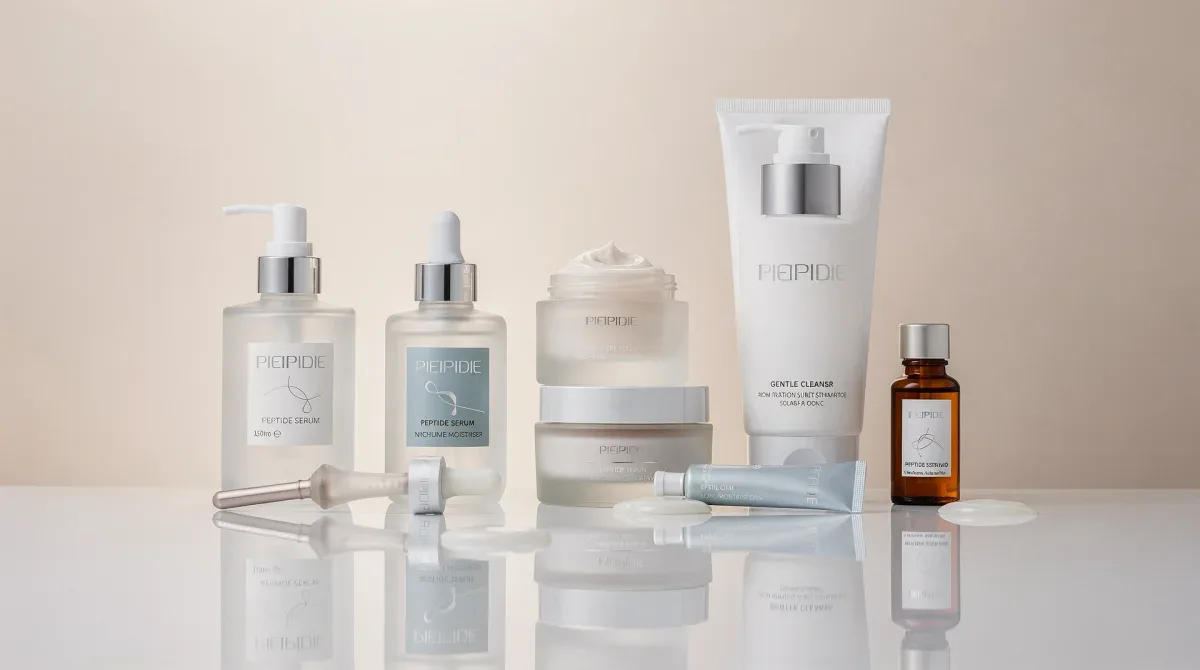
Research on cosmetic peptides continues to explore ingredient stability, formulation design, and potential benefits for skin appearance. New technologies may offer different approaches to incorporating these compounds into skincare products.
However, emerging research should not be confused with established clinical applications. Improvements demonstrated in laboratory experiments may not produce equivalent outcomes when tested on human skin.
For peptide skincare in 2026 and beyond, independent clinical evidence remains important. Consumers should favor transparent product information over predictions about future breakthroughs.
Personalized Peptide Formulations
Personalized skincare aims to select products according to factors such as skin type, sensitivity, and individual concerns. Some companies are exploring digital tools to support product recommendations.
However, genetic profiles and automated assessments do not currently establish that consumers need a precise combination of cosmetic peptides. Such claims require appropriate scientific validation.
Personalized recommendations may become more sophisticated as research develops, but they should not replace professional evaluation when skin symptoms suggest an underlying medical condition.
Emerging Delivery Systems and Product Design
Researchers investigate different formulation approaches to influence the stability and penetration of peptide ingredients. These may include emulsions and other delivery systems designed for topical application.
However, improved penetration in experimental testing does not automatically establish greater effectiveness or safety in everyday use. Clinical studies are necessary to determine meaningful outcomes.
Consumers should evaluate finished products rather than assuming a particular delivery technology guarantees superior results. The complete formulation and its supporting evidence remain central.
What Consumers Should Watch for Next
Future research may clarify which topical peptides offer reproducible benefits and which formulations provide clinically meaningful improvements. Well-designed comparative studies would be particularly valuable.
Product transparency, ingredient concentrations, and independent testing can help consumers evaluate new releases. These considerations are relevant regardless of how innovative a product appears in advertising.
For everyday skincare, maintaining a gentle routine remains a practical foundation. New peptide technologies should be considered additions only when their benefits and tolerability justify their use.
Key Takeaways for a Peptide Night Routine in 2026
Peptide-containing skincare products may offer cosmetic benefits, but individual ingredients have different levels of supporting evidence. The three compounds examined in this guide should not be treated as a proven barrier-repair combination.
There is also no confirmed clinical basis for promising a 45% faster recovery rate from layering these ingredients. A suitable moisturizer and gentle cleansing remain important components of barrier care.
The following table summarizes the main considerations when planning a peptide skincare night routine. These recommendations focus on realistic expectations, tolerability, and responsible product selection.
Key Point | Brief Description |
|---|---|
Peptide Selection | Acetyl hexapeptide-8, palmitoyl tetrapeptide-7, and copper tripeptide-1 have different proposed cosmetic applications and limitations. Learn more about Acetyl Hexapeptide-8 and related ingredients. |
Layering Technique | Cleanse gently, apply a suitable treatment if desired, and finish with moisturizer. Follow individual product instructions rather than assuming more layers improve absorption. |
Barrier Repair | No adequate evidence establishes that combining these three peptides produces 45% faster skin barrier repair. |
Supporting Ingredients | Moisturizers containing ceramides, hyaluronic acid, or other suitable ingredients may help maintain hydration and skin comfort. |
Frequently Asked Questions About 2026 Peptide Skincare
What exactly are bio-identical peptides?
The term bio-identical is sometimes used in cosmetic marketing to describe peptides intended to resemble naturally occurring biological compounds. However, not all cosmetic peptides are structurally identical to those found in the human body, and some contain deliberate chemical modifications. The term alone does not establish superior safety or effectiveness. Consumers should evaluate the specific ingredient, formulation, and supporting evidence rather than rely exclusively on marketing descriptions.
Why is layering important for these peptides?
Layering allows different skincare products to be used within the same routine, but there is no established requirement to combine three peptide serums. A simple sequence of gentle cleansing, an optional treatment, and moisturizer may be sufficient for many people. Using multiple products can increase complexity and make irritation harder to identify. No reliable clinical evidence demonstrates that three-peptide layering produces a specific acceleration in skin barrier repair.
Can I use these peptides with my current retinoid?
Some peptide products may be compatible with retinoids, but tolerance depends on the formulation, concentration, and individual skin condition. Retinoids can cause irritation, particularly when combined with several active products or used on already sensitive skin. Follow the instructions for any prescribed retinoid and introduce new cosmetics carefully. A dermatologist can help evaluate combinations when persistent irritation or an underlying skin condition is present.
How soon can I expect to see results in skin barrier repair?
There is no validated timeline demonstrating that these three peptides produce 45% faster barrier recovery. Changes in dryness or comfort depend on the underlying cause, product selection, and individual response. Appropriate moisturizing may improve hydration, but persistent irritation can require medical evaluation. Consumers should avoid assuming that a particular cosmetic routine will deliver visible recovery within a guaranteed number of days or weeks.
Are there any side effects to layering bio-identical peptides?
Peptide-containing skincare products may be tolerated by many people, but irritation, redness, or allergic reactions can occur because of the peptide or other ingredients in the formula. Introducing several new serums simultaneously makes reactions harder to identify. Consider testing new products cautiously and discontinue use when persistent irritation develops. People with significant sensitivity or diagnosed skin conditions should seek individualized dermatological guidance.
Looking Ahead: The Evolution of Skin Repair
How to Layer 3 Emerging Bio-Identical Peptides in Your 2026 Night Routine for 45% Faster Skin Barrier Repair highlights the growing interest in cosmetic peptides and their potential applications. However, the specific 45% improvement promised in the headline has not been established by adequate clinical evidence.
Acetyl hexapeptide-8, palmitoyl tetrapeptide-7, and copper tripeptide-1 are different ingredients with distinct research histories. Their use should be guided by appropriate product information, individual skin tolerance, and realistic expectations.
For everyday skin barrier care, gentle cleansing, appropriate moisturizing, and avoiding unnecessary irritation remain practical priorities. As research develops, stronger independent studies may provide clearer guidance on the role of peptides in evidence-based skincare.