Tranexamic Acid 5% vs. Hydroquinone 4%: Safer Hyperpigmentation Strategy
Anúncios
Hyperpigmentation treatment often requires patience, consistency, and careful selection of active ingredients. Tranexamic acid 5% and hydroquinone 4% are two options frequently discussed for stubborn pigmentation.
The source compares these ingredients over a 12-week period, focusing on their mechanisms, expected results, tolerability, and potential risks.
Because hydroquinone is a potent treatment and pigmentation has different causes, professional evaluation remains important before starting or combining active therapies.
Understanding Stubborn Hyperpigmentation
Persistent hyperpigmentation can include melasma, sun-related spots, and post-inflammatory dark marks. These conditions involve increased melanin production in specific areas of the skin.
Anúncios
Triggers can include ultraviolet exposure, hormonal changes, inflammation, and skin injury. Different causes may respond differently to the same treatment.
An effective hyperpigmentation treatment therefore depends on identifying the type of pigmentation and choosing an approach suited to the individual's skin.
Hydroquinone 4%: A Potent but Controversial Option
Hydroquinone has long been used as a strong depigmenting agent. At 4%, it works primarily by reducing melanin production through inhibition of tyrosinase.
Its effectiveness has made it an important option for difficult pigmentation, but irritation and concerns related to prolonged or inappropriate use require caution.
Anúncios
For this reason, hydroquinone-based hyperpigmentation treatment is generally better approached with professional guidance and limited treatment periods.
Mechanism of Action and Efficacy
Hydroquinone interferes with melanin production by inhibiting tyrosinase, an enzyme involved in pigment formation.
This direct mechanism can produce visible lightening in areas of excess pigmentation, particularly when treatment is followed consistently.
The source describes hydroquinone 4% as relatively fast acting, but its potency also means monitoring for irritation or other adverse effects is important.
Potential Side Effects and Safety Concerns
Hydroquinone can cause irritation, redness, burning, or itching, particularly during early treatment or in sensitive skin.
Skin irritation: Redness, burning, or itching may occur.
Contact dermatitis: Some users can develop inflammatory reactions.
Ochronosis: Rare bluish-black discoloration has been associated with prolonged or inappropriate use.
Sun sensitivity: Consistent photoprotection remains important during treatment.
These risks make unsupervised long-term use inappropriate. A dermatologist can help determine whether hydroquinone is suitable and how long it should be used.
Safety is an important part of any hyperpigmentation treatment, especially when stronger depigmenting agents are involved.
Tranexamic Acid 5%: An Emerging Alternative
Tranexamic acid 5% has gained attention as another topical option for pigmentation, particularly melasma and post-inflammatory hyperpigmentation.
Its mechanism differs from hydroquinone because it influences pathways associated with plasmin activity, inflammation, and melanocyte stimulation.
This different approach can make tranexamic acid attractive in hyperpigmentation treatment plans where tolerability is an important consideration.
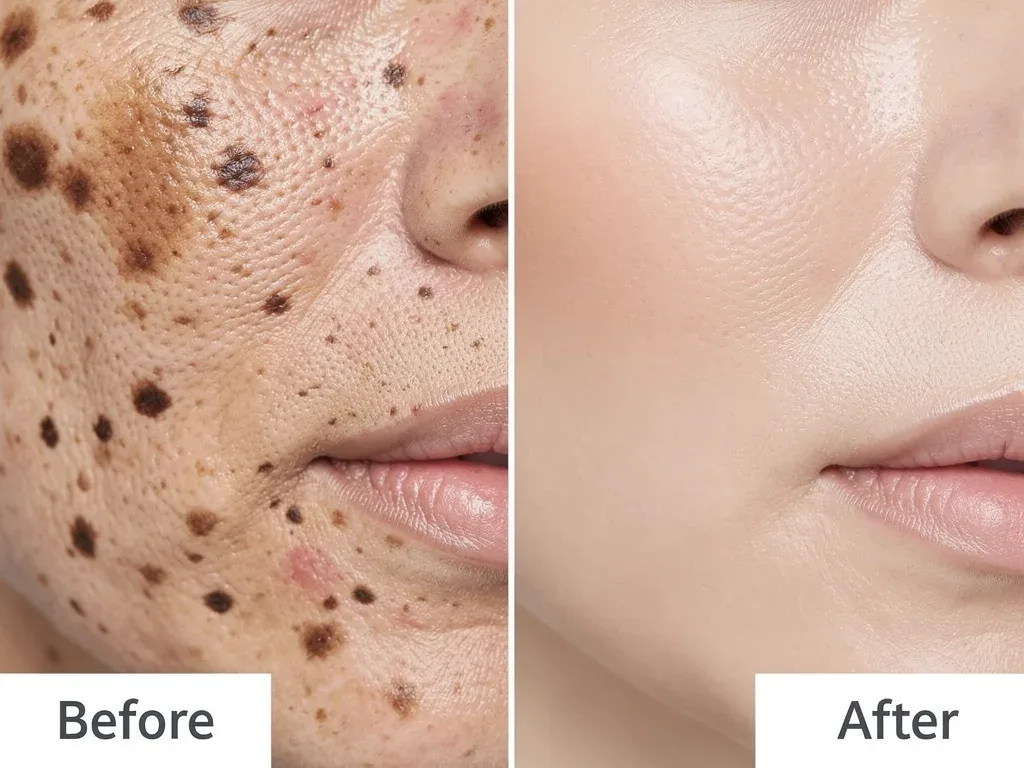
Mechanism of Action and Efficacy
Tranexamic acid interferes with the plasminogen-plasmin pathway, which can become activated by ultraviolet exposure and inflammation.
Reducing this signaling may decrease some of the processes that stimulate melanin production, contributing to gradual improvement in pigmentation.
The source describes noticeable improvement over several weeks, making consistent application an important part of this hyperpigmentation treatment.
Advantages and Milder Side Effects
Topical tranexamic acid is often discussed as a gentler alternative because many users tolerate it better than stronger depigmenting agents.
Reduced irritation: Often better tolerated by sensitive skin.
No known association with ochronosis: This differs from concerns surrounding prolonged hydroquinone misuse.
Potential maintenance use: It may be considered for longer-term strategies depending on professional guidance.
Anti-inflammatory activity: This may be useful when inflammation contributes to pigmentation.
Tolerability still varies between individuals, and irritation remains possible with any active skincare ingredient.
For some patients, tranexamic acid may offer a more sustainable hyperpigmentation treatment when aggressive treatment is not appropriate.
The 12-Week Strategy: A Comparative Analysis
A 12-week period provides enough time to observe meaningful changes with many topical pigmentation treatments while monitoring tolerance.
The source contrasts hydroquinone's stronger and potentially faster action with the gentler, more gradual profile associated with tranexamic acid.
Choosing between them should depend on pigmentation type, severity, skin sensitivity, medical history, and professional assessment rather than speed alone.
Week-by-Week Expectations
The source suggests that hydroquinone users may begin seeing visible lightening within the first several weeks, with further improvement by week 12.
Tranexamic acid may produce more gradual changes, with improvement becoming more noticeable after several weeks of consistent use.
These timelines are not guarantees. Individual response to hyperpigmentation treatment can vary considerably depending on skin type and underlying cause.
Combination Therapies and Future Outlook
Dermatologists sometimes use multiple depigmenting strategies when a single ingredient does not provide sufficient improvement.
Sequential or combination approaches may involve tranexamic acid alongside other topical therapies, but treatment plans should be individualized.
Combining strong active ingredients without guidance can increase irritation, so professional supervision remains important when building a more complex regimen.
Safety Profile and Long-Term Considerations
Long-term safety is one of the main differences discussed when comparing hydroquinone and tranexamic acid.
Hydroquinone requires particular caution because prolonged or inappropriate use has been associated with complications such as exogenous ochronosis.
Tranexamic acid is presented as having a more favorable tolerability profile, but every hyperpigmentation treatment still requires monitoring for adverse reactions.
Patient Suitability and Contraindications
Skin sensitivity, medical history, pregnancy status, and the underlying cause of pigmentation can influence treatment selection.
The source advises particular caution with hydroquinone in pregnancy, breastfeeding, or highly sensitive skin and emphasizes medical guidance.
Tranexamic acid may be better tolerated topically, but pregnancy or breastfeeding should still prompt consultation with a healthcare professional before treatment.
Managing Expectations and Adherence
Hyperpigmentation often improves gradually rather than immediately. Consistency matters, but continuing treatment despite significant irritation is not appropriate.
Daily sun protection is also essential because ultraviolet exposure can worsen pigmentation and undermine progress from topical therapy.
A comprehensive hyperpigmentation treatment usually combines appropriate active ingredients with gentle skincare and reliable photoprotection.
Expert Opinions and Clinical Guidelines
Dermatologists generally weigh treatment strength against tolerability when selecting therapies for pigmentation.
Hydroquinone may be considered for more resistant cases, while tranexamic acid can be useful when a gentler or maintenance-oriented approach is preferred.
The central principle is individualized care rather than assuming that one hyperpigmentation treatment is best for every patient.
Recommendations for Different Skin Types
Sensitive skin may require lower-irritation approaches and slower introduction of active ingredients.
People with darker skin tones may also require particular attention to irritation because inflammation itself can worsen post-inflammatory pigmentation.
This makes tolerability and barrier protection especially important when selecting or adjusting a hyperpigmentation treatment.
Future Research and Innovations
Research continues to explore improved formulations and delivery methods for tranexamic acid and other depigmenting ingredients.
Investigators are also studying combinations that may improve results while reducing irritation and limiting exposure to stronger agents.
Future developments may provide more personalized options based on pigmentation type, skin characteristics, and individual treatment response.
Choosing the Right Strategy for You
The decision between tranexamic acid 5% and hydroquinone 4% should begin with an accurate diagnosis of the pigmentation.
A dermatologist can evaluate whether the discoloration represents melasma, post-inflammatory hyperpigmentation, sun damage, or another condition requiring a different approach.
That evaluation helps create a safer hyperpigmentation treatment plan and reduces the risk of using potent ingredients unnecessarily or incorrectly.
Key Treatment | Primary Characteristics |
|---|---|
Hydroquinone 4% | Potent melanin inhibitor that can work quickly but carries a higher risk of irritation and complications with inappropriate prolonged use. |
Tranexamic Acid 5% | Gentler anti-pigmentation option often discussed for melasma and post-inflammatory hyperpigmentation, with generally better tolerability. |
12-Week Strategy | A practical period for assessing visible improvement, tolerance, and whether treatment should be adjusted. |
Safety & Efficacy | Treatment selection should balance potential effectiveness with irritation risk, skin type, and professional guidance. |
Frequently Asked Questions About Hyperpigmentation Treatments
What is the primary difference between Tranexamic Acid 5% and Hydroquinone 4%?▼
Hydroquinone directly suppresses melanin production through tyrosinase inhibition, while tranexamic acid influences inflammatory and plasmin-related pathways that can contribute to pigmentation.
Is Tranexamic Acid 5% effective for all types of hyperpigmentation?▼
The source particularly associates it with melasma and post-inflammatory hyperpigmentation, but effectiveness can vary according to the cause and severity of discoloration.
How long does it take to see results with a 12-week strategy?▼
The source describes earlier improvement with hydroquinone in some cases and more gradual improvement with tranexamic acid, with meaningful changes developing over several weeks.
Can I use Tranexamic Acid 5% and Hydroquinone 4% together?▼
Combination treatment should be discussed with a dermatologist because using multiple strong actives together can increase irritation and may not be appropriate for every skin type.
What are the long-term safety concerns with these treatments?▼
Hydroquinone requires particular caution with prolonged unsupervised use because of risks including irritation and ochronosis. Tranexamic acid is generally presented as better tolerated, but monitoring is still appropriate.
What this means
The comparison between tranexamic acid 5% and hydroquinone 4% shows that effective hyperpigmentation treatment involves more than choosing the strongest ingredient.
Safety, skin tolerance, pigmentation type, sun protection, and treatment duration all influence whether a strategy is likely to succeed.
For persistent pigmentation, professional evaluation remains the safest way to decide whether hydroquinone, tranexamic acid, another therapy, or a combination approach is appropriate.