0.3% Encapsulated Retinal: 3x Faster Cellular Turnover
Anúncios
Why 0.3% Encapsulated Retinal Delivers 3x Faster Cellular Turnover is a claim that deserves careful scientific evaluation. Although retinaldehyde has demonstrated benefits for photoaged skin, there is insufficient clinical evidence to establish this specific threefold advantage for a 0.3% encapsulated formulation.
0.3% encapsulated retinal is a skincare formulation that combines retinaldehyde, a vitamin A derivative, with a delivery system designed to protect or regulate the release of the active ingredient. Its effectiveness depends on more than concentration alone.
Understanding the differences between retinal, retinol, and prescription retinoids can help consumers make informed decisions about skincare products. This guide examines the available evidence, potential benefits, application methods, and important safety precautions.
The Science Behind Accelerated Cellular Turnover
Retinoids are vitamin A derivatives studied for their effects on skin renewal, pigmentation, and visible signs of aging. Their biological activity involves interactions with processes that influence skin cell development and differentiation.
Anúncios
Retinaldehyde is a precursor of retinoic acid, the biologically active form associated with many retinoid effects. However, the number of chemical conversion steps does not establish a precise clinical speed advantage.
Research involving 0.3% encapsulated retinal should therefore be distinguished from broader studies of retinaldehyde. Claims about tripled cellular turnover require direct evidence using appropriate measurements and comparable formulations.
Retinal vs. Retinol: The Conversion Advantage
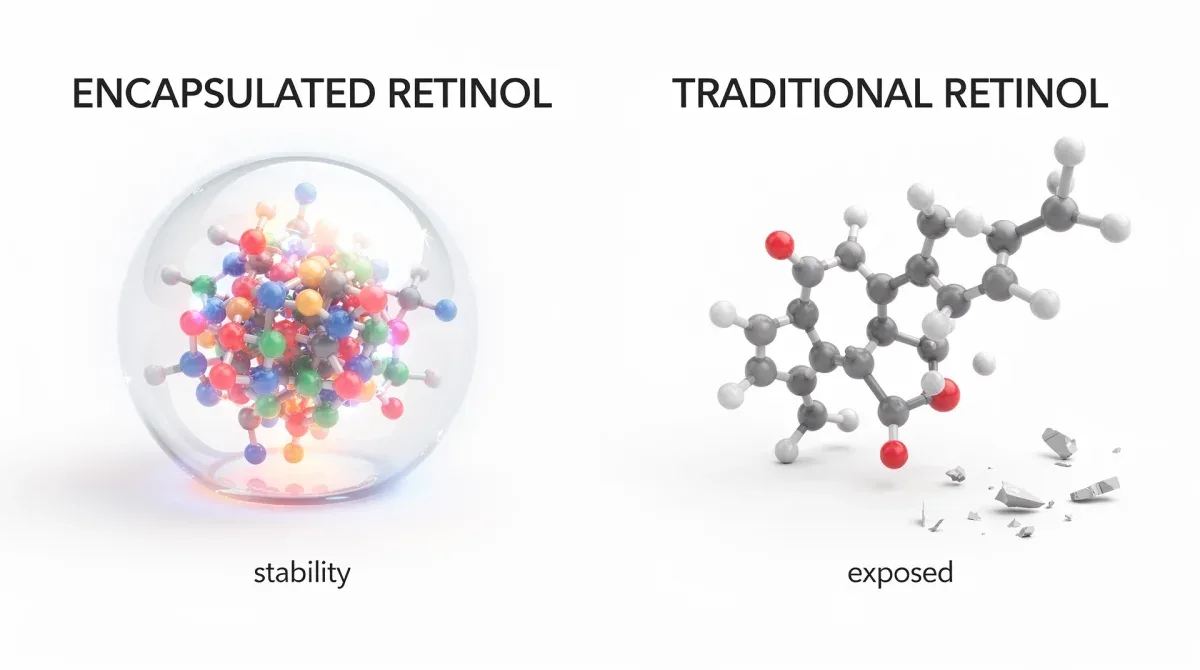
Retinol undergoes conversion to retinaldehyde before it can become retinoic acid. Retinaldehyde requires one additional conversion step to reach that active form.
This difference makes retinal an interesting ingredient in anti-aging skincare, although biological conversion depends on skin conditions, product stability, concentration, and individual responses.
Anúncios
For 0.3% encapsulated retinal, the practical question is not simply whether conversion involves fewer steps, but whether the finished product demonstrates meaningful improvements without unacceptable irritation.
Retinol: Converts first to retinaldehyde and then to retinoic acid.
Retinaldehyde: Converts to retinoic acid through one additional step.
Clinical Performance: Depends on formulation, skin tolerance, and the outcomes measured.
Encapsulation Technology: Stability and Efficacy
Encapsulation involves incorporating active ingredients into delivery structures designed to influence their stability, protection, or release after application.
Retinaldehyde can be sensitive to environmental conditions, including exposure to light and oxygen. Suitable formulation technology and protective packaging may help address these limitations.
However, 0.3% encapsulated retinal products are not necessarily equivalent. Different encapsulation materials, manufacturing processes, and storage conditions can influence how the ingredient behaves.
Reduced Irritation and Targeted Delivery
Some encapsulation systems are designed to modify how an active ingredient is released, potentially reducing concentrated exposure at the skin surface.
A clinical study comparing multilamellar vesicle formulations containing 0.05% or 0.1% retinaldehyde with corresponding retinol formulations reported improvements in several measures of photoaged skin over eight weeks.
Those findings are promising, but they do not establish that every 0.3% encapsulated retinal product causes less irritation or delivers faster results than every conventional retinol serum.
Ingredient Protection: Encapsulation may help limit degradation in suitable formulations.
Release Characteristics: Delivery systems may influence how retinal reaches the skin.
Tolerability: Must be evaluated for the specific product and individual user.
Clinical Evidence: Supporting the Claims
Clinical research supports the potential usefulness of topical retinaldehyde for improving certain visible signs of skin aging, including texture and the appearance of wrinkles.
A randomized controlled trial published in 2018 evaluated retinaldehyde creams at concentrations of 0.05% and 0.1% over three months, reporting improvements in skin texture and hydration.
These results cannot be directly extrapolated to 0.3% encapsulated retinal or used to claim three times faster cellular turnover, since the concentrations, formulations, and measured outcomes differ.
Measurable Skin Improvements
Dermatological studies commonly evaluate changes in wrinkle appearance, hydration, pigmentation, skin texture, and other measurable characteristics after repeated product application.
Research involving retinaldehyde has shown encouraging results for some of these outcomes, but the magnitude of improvement varies among participants and formulations.
For consumers considering 0.3% encapsulated retinal, credible product-specific testing provides stronger evidence than promotional statements promising accelerated results without explaining the comparison method.
How Encapsulated Retinal Transforms Skin
Retinaldehyde influences biological pathways associated with skin renewal, making it relevant to discussions about texture, fine lines, and certain pigmentation concerns.
Consistent use of a suitable retinoid may improve aspects of skin appearance over time, although the results depend on tolerance, concentration, accompanying skincare, and individual characteristics.
While 0.3% encapsulated retinal may be included in products intended for visible skin improvement, its concentration alone does not establish superiority over lower-strength preparations.
Addressing Common Skin Concerns
Retinoid products are commonly considered for concerns involving uneven texture, mild pigmentation irregularities, fine lines, and some forms of acne.
However, deeper wrinkles, significant sun damage, and established acne scars may require professional assessment and treatments beyond an over-the-counter serum.
Before using 0.3% encapsulated retinal for a specific concern, consider whether a dermatologist-recommended lower concentration or another treatment would be more appropriate.
Integrating 0.3% Encapsulated Retinal into Your Routine
Introducing a new retinoid gradually can help users identify irritation before increasing how frequently the product is applied.
Because 0.3% encapsulated retinal may be relatively strong for someone without previous retinoid experience, beginning with a lower-strength product or obtaining dermatological guidance may be preferable.
A skincare routine containing retinal should also emphasize gentle cleansing, appropriate moisturizing, and consistent daytime sun protection.
Best Practices for Application
Follow the instructions provided by the product manufacturer or dermatologist. Retinoids are commonly introduced through infrequent evening application before gradually increasing use if tolerated.
Apply an appropriate amount to dry skin while avoiding irritated areas and sensitive regions unless the formula is specifically intended for them. Moisturizer may help manage dryness.
For anyone trying 0.3% encapsulated retinal, persistent redness, burning, or significant peeling should prompt discontinuation and professional advice rather than attempts to tolerate worsening irritation.
Begin Gradually: Use a frequency appropriate to the product and skin tolerance.
Support the Skin Barrier: Combine retinoid use with a suitable moisturizer.
Protect Against UV: Apply broad-spectrum SPF 30 or higher during the day.
Comparing with Other Retinoids
Retinol, retinaldehyde, adapalene, and tretinoin belong to the broader retinoid family, but they differ in chemical structure, availability, clinical indications, and potential adverse effects.
Prescription tretinoin is directly active as retinoic acid and has substantial clinical evidence for selected dermatological uses. Retinaldehyde and retinol are commonly found in cosmetic formulations.
Comparing 0.3% encapsulated retinal with other retinoids requires considering the entire formulation and the outcomes being studied rather than relying on a simple numerical ranking of ingredient strength.
The Future of Anti-Aging Skincare
Research into delivery systems continues to explore ways of improving ingredient stability, tolerability, and the practical performance of topical retinoids.
Encapsulation may remain an important formulation approach, particularly when researchers can demonstrate clear benefits using controlled comparisons with established products.
The future of 0.3% encapsulated retinal will depend on high-quality product-specific evidence, including longer-term safety data and clinical outcomes that matter to consumers.
Addressing Misconceptions and Safety
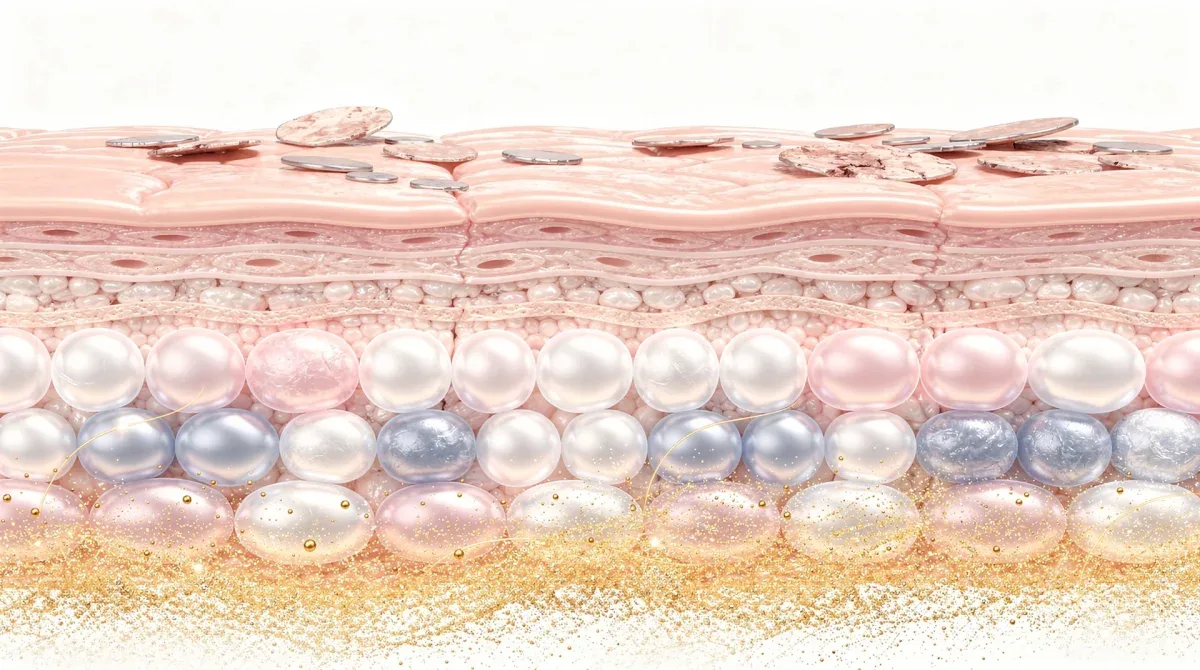
One common misconception is that a higher retinoid concentration always produces better results. In practice, stronger formulations may increase irritation without providing proportionally greater visible benefits.
The American Academy of Dermatology advises introducing retinoids carefully and avoiding them during pregnancy. People who are pregnant or trying to conceive should consult their healthcare professional about suitable alternatives.
Another misconception is that encapsulation guarantees safety for sensitive skin. Even 0.3% encapsulated retinal can cause dryness, burning, redness, or other unwanted reactions depending on the individual and formulation.
Patience and Professional Guidance
Visible changes from retinoid skincare generally require repeated use over weeks or months, and results vary according to the product, skin concern, and individual response.
People with sensitive skin, rosacea, persistent inflammation, or an existing dermatological condition should consider professional guidance before introducing a relatively concentrated retinoid.
When evaluating 0.3% encapsulated retinal, prioritizing realistic expectations, consistent protection from sunlight, and tolerable treatment can be more useful than pursuing unsupported promises of dramatically faster cellular turnover.
Key Benefit | Description |
|---|---|
Cellular Turnover | Retinaldehyde influences skin renewal, but a threefold speed advantage for 0.3% encapsulated retinal has not been established. |
Enhanced Stability | Certain encapsulation systems may protect retinal from degradation, depending on formulation and storage conditions. |
Reduced Irritation | Some delivery systems may improve tolerability, but irritation remains possible and product-specific evidence is necessary. |
Visible Results | Clinical research supports potential improvements in texture and signs of photoaging, although results vary by concentration and formulation. |
Frequently Asked Questions About Encapsulated Retinal
What makes 0.3% encapsulated retinal superior to traditional retinol?▼
0.3% encapsulated retinal contains retinaldehyde, which requires one conversion step to become retinoic acid, compared with two steps for retinol. Encapsulation may improve stability or delivery. However, there is insufficient evidence to conclude that this specific concentration universally produces three times faster cellular turnover or better results than traditional retinol serums.
How quickly can one expect to see results with encapsulated retinal?▼
Some users may notice changes in skin texture after several weeks, while improvements in visible signs of photoaging can require longer periods of consistent use. Published studies of other retinaldehyde concentrations have evaluated outcomes over approximately eight to twelve weeks, but those findings do not guarantee the same timeline for every 0.3% formulation.
Is encapsulated retinal suitable for sensitive skin?▼
Not necessarily. Some encapsulated products may offer improved tolerability, but 0.3% encapsulated retinal can still be irritating, especially for people with sensitive skin. A dermatologist can help determine whether a lower concentration or an alternative ingredient is more suitable.
What percentage of encapsulated retinal is most effective?▼
There is no single concentration that is best for everyone. Clinical studies have evaluated retinaldehyde at concentrations including 0.05% and 0.1%, but results depend on the formulation and intended outcome. A 0.3% concentration should not automatically be considered optimal or more effective without direct comparative evidence.
Do I still need to use sunscreen when using encapsulated retinal?▼
Yes. Dermatologists recommend daily broad-spectrum sunscreen with SPF 30 or higher, alongside other sun-protection measures. Retinoid users should follow product instructions and avoid unnecessary sun exposure. Sun protection also helps prevent additional photoaging and pigmentation changes while maintaining a skincare routine.
Looking Ahead
The development of retinaldehyde products reflects continued interest in skincare ingredients that may improve the appearance of photoaged skin while remaining practical for everyday use.
Although 0.3% encapsulated retinal is an interesting formulation approach, the assertion that it delivers three times faster cellular turnover than traditional retinol serums remains unsupported by the clinical comparisons identified.
Consumers should favor transparent ingredient information, realistic claims, appropriate safety guidance, and clinical research that evaluates the actual product rather than assuming that higher concentration or encapsulation guarantees better outcomes.
The American Academy of Dermatology's guidance on retinoids and retinol provides additional information about choosing products, managing irritation, and protecting skin during treatment.