AI Wearables Integration 2026: Key Developments and Use Cases

Anúncios
AI wearables in healthcare are transforming how patients are monitored, delivering real-time insights and enabling more personalized treatment plans. These devices support proactive care, helping detect issues earlier and improve overall health outcomes.
In 2026, the integration of AI into everyday wearables is accelerating, making health tracking more precise and accessible. From smartwatches to advanced biosensors, users are gaining continuous feedback that was once only available in clinical settings.
As this trend evolves, individuals should monitor advancements in data accuracy, privacy protections, and integration with healthcare systems. The shift toward AI-driven wearables signals a future where technology plays a central role in daily health management and decision-making.
The rise of AI wearables
The rise of AI wearables is changing how we interact with technology daily. These devices, from smartwatches to fitness trackers, now go beyond simple functionalities.
With the integration of artificial intelligence, they are becoming smarter and more intuitive.
In recent years, we’ve seen significant advancements in this field. AI wearables are not only tracking our physical activities but also using data to provide insights tailored to our health and daily routines.
This trend is expected to continue growing, making our lives even more interconnected.
Key Features of AI Wearables
Several notable features of AI wearables are emerging:
- Real-time health monitoring, including heart rate and sleep patterns.
- Personalized recommendations based on user behavior.
- Integration with smart home devices for seamless connectivity.
This technology is making wearables more valuable, pushing them beyond traditional boundaries. As AI algorithms learn from user data, these devices can adapt to our specific needs.
Why AI Wearables Are Gaining Popularity
There are several reasons why AI wearables are gaining traction:
- Increased health awareness among consumers.
- Growing interest in fitness and wellness tracking.
- Advancements in AI technology that enhance user experience.
As a result, more individuals are considering these devices as essential tools for daily life. The integration of AI provides not only efficiency but also encourages healthier lifestyle choices.
In the coming years, we can expect to see even more innovative features in wearables. The rising capabilities of AI are set to enhance user experiences, bringing forth devices that intuitively respond to our needs and preferences.
The future of technology is bright, with AI wearables leading the charge toward smarter living.
Key benefits of integrating AI in wearables
Integrating AI in wearables brings a multitude of advantages that enhance user experience and health management.
These devices are becoming smarter, helping users get more from their daily activities and health tracking.
One major benefit is improved personalization. AI algorithms analyze user data to deliver tailored insights. For instance, a fitness tracker can adapt its recommendations based on your activity levels, suggesting workouts that fit your routine.
Enhanced Health Monitoring
Wearables with AI capabilities provide real-time health monitoring. This includes:
- Continuous heart rate tracking that helps users stay within optimal zones.
- Sleep analysis that assesses quality and provides recommendations for improvement.
- Activity tracking that encourages movement and productivity throughout the day.
With these features, users gain a clearer understanding of their health and can make informed decisions. The data collected can also be shared with healthcare providers for better management and preventative care.
Seamless Connectivity
AI wearables integrate seamlessly with other devices and platforms. This connectivity means users can:
- Sync data across multiple devices for comprehensive insights.
- Receive notifications and updates without needing to check their phones constantly.
- Control smart home devices, enhancing convenience.
This level of connectivity enriches the user experience, making interactions more intuitive and engaging. The integration of AI also allows wearables to learn user habits, improving functionality over time.
As more people adopt smart wearables, the combination of AI and health data will continue to foster innovation in the tech industry. We can expect these devices to evolve, offering even more personalized and connected experiences in the future.
Predicted features in 2026
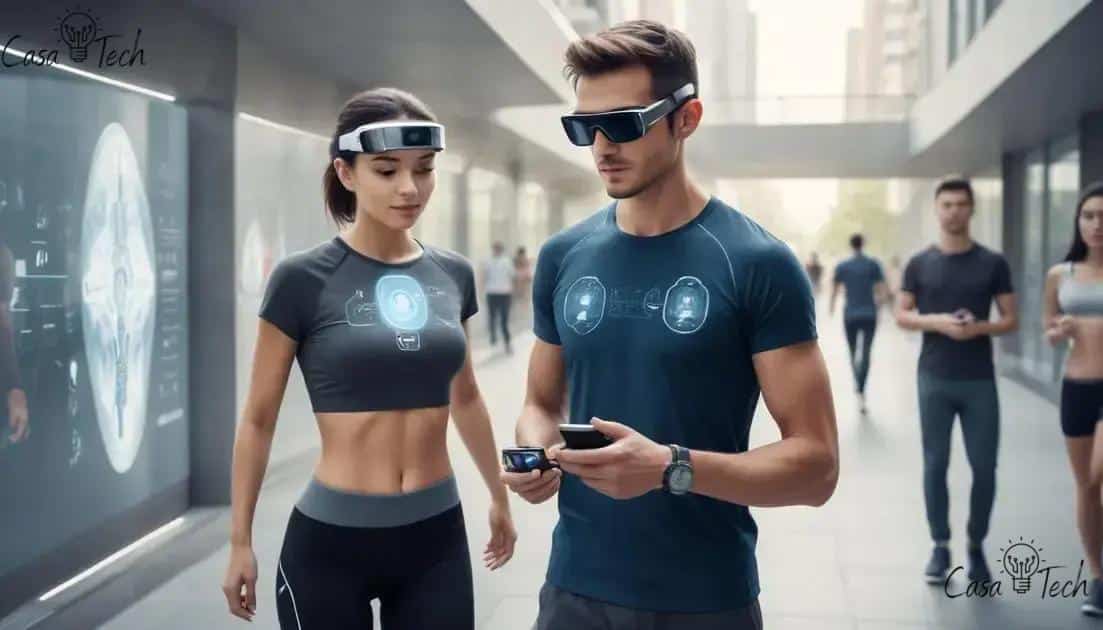
Predictions for wearable technology in 2026 suggest exciting advancements that will integrate AI to enhance user interactions and functionalities. These innovations are set to transform how users experience wearable devices in their daily lives.
One notable feature expected is advanced health monitoring. Wearables will likely include capabilities such as:
- Real-time blood glucose monitoring, helping individuals manage diabetes effortlessly.
- Wearable ECG monitors that provide heart health insights without the need for bulky devices.
- Enhanced sleep quality tracking, utilizing AI to suggest lifestyle changes based on sleep patterns.
Such features aim to promote proactive health management, enabling users to stay ahead of potential health issues.
Improved User Experience
In 2026, the user experience will also undergo significant improvements. AI will allow wearables to offer:
- Voice-activated controls, making it easier to interact with devices on the go.
- Enhanced battery life through adaptive power management tailored to usage patterns.
- Smart notifications that prioritize important messages based on user behavior.
This level of personalization ensures that devices not only meet user expectations but exceed them. Wearables will adapt to daily routines, leading to a seamless integration into life.
Integration with Augmented Reality (AR)
Augmented reality features are projected to join the wearable landscape as well. By 2026, wearables will likely leverage AR technology for:
- Interactive fitness experiences that overlay workout guidance onto real-world environments.
- Navigation assistance that displays directions in the user’s field of view.
- Gamification of tasks, encouraging users to complete challenges in a fun and engaging way.
These features will set the stage for a more immersive experience, merging the digital and physical worlds seamlessly.
Overall, the predicted advancements for wearables in 2026 highlight an exciting future where AI and technology work together to enhance health, productivity, and enjoyment.
How AI is reshaping user experience
AI is fundamentally changing how users interact with wearable devices. This transformation is making these technologies not only smarter but also more user-friendly. By leveraging data, wearables can tailor experiences to individual needs.
One significant way that AI is reshaping user experience is through enhanced personalization. Wearable devices now learn from your habits and preferences. For example, they can:
- Adjust notifications based on user behavior, ensuring that important alerts are not missed.
- Offer fitness recommendations based on past performance, encouraging users to achieve their goals.
- Analyze sleep patterns and suggest improvements for better rest.
This personalization creates a more engaging and useful experience for users. It encourages long-term use and fosters a deeper connection to the device.
Smart Interface Improvements
Another key area where AI impacts user experience is through smarter interfaces. As technology advances, devices are becoming more intuitive. Users can expect:
- Voice command features that allow for hands-free operation.
- Gesture controls that simplify navigation and interactions.
- Visual interfaces that adapt based on user context and settings.
Such enhancements minimize the learning curve and make technology accessible to everyone, even those who may not be tech-savvy.
Proactive Health Management
AI also plays a vital role in proactive health management. Wearables can monitor specific health metrics continuously and provide real-time feedback. For example, they can:
- Alert users to irregular heart rates and suggest action steps.
- Track hydration levels and remind users to drink water.
- Prompt activity if prolonged inactivity is detected.
This real-time feedback is essential for maintaining health and encourages users to take charge of their well-being.
Ultimately, as AI evolves, the integration in wearables will lead to richer user experiences tailored to each individual.
Challenges for developers
As the wearables industry continues to evolve, developers face several challenges in creating effective and user-friendly devices. These challenges can impact how well AI integrates into the technology.
One significant challenge is ensuring data security and user privacy. With wearables constantly collecting data, developers must implement strong security measures to protect sensitive information. They need to:
- Encrypt data to prevent unauthorized access.
- Be transparent about what data is collected and how it is used.
- Implement user-friendly privacy settings that allow users to control their information.
Addressing these concerns is crucial for building trust among users.
User Interface Design
Another challenge involves user interface design. As wearables become smarter, interfaces must remain intuitive and easy to use. Developers need to focus on:
- Creating designs that are visually appealing and easy to navigate.
- Providing users with clear instructions on how to use features.
- Testing usability across diverse user groups to ensure everyone can benefit from the technology.
Effective UI design can significantly enhance the overall user experience, encouraging wider adoption of wearable devices.
Battery Life and Performance
Battery life remains a critical issue for developers. As devices take on more features, balancing performance with battery consumption is vital. Developers need to explore:
- Optimizing AI algorithms for power efficiency.
- Innovating hardware solutions that extend battery life.
- Ensuring seamless performance without compromising the user experience.
Finding this balance allows users to enjoy long-lasting usability without constantly needing to recharge their devices.
Overall, while the future of AI wearables is bright, developers must navigate these challenges thoughtfully. Addressing security, user experience, and performance will be key to creating successful and effective wearable technologies.
Future of AI wearables in healthcare

The future of AI wearables in healthcare looks promising, with technology set to revolutionize patient care and management. These devices are expected to play a critical role in monitoring health conditions continuously and efficiently.
One key aspect of this future is increased remote patient monitoring. AI wearables will enable healthcare providers to track patients’ vital signs in real-time, allowing for:
- Early detection of potential health issues before they escalate.
- Personalized treatment plans based on accurate data.
- Reduced hospital visits and improved patient compliance.
This technology helps patients stay connected with their healthcare teams and fosters a proactive approach to health management.
AI Diagnostics
AI wearables will also enhance diagnostic capabilities in healthcare settings. As these devices advance, they will:
- Analyze data patterns to identify diseases at earlier stages.
- Utilize machine learning to improve diagnostic accuracy over time.
- Provide actionable insights to physicians, making clinical decisions faster and more accurately.
These improvements can lead to better patient outcomes and more effective management of chronic conditions.
Data-Driven Health Insights
Another exciting aspect of the future is the potential for data-driven health insights. Wearables will collect vast amounts of data that AI can analyze, offering invaluable information such as:
- Understanding how lifestyle choices impact health.
- Predicting health risks based on historical data.
- Developing preventive strategies tailored to individual patients.
This data-centric approach empowers patients to make informed decisions about their health, supported by their care teams.
Overall, the integration of AI wearables in healthcare is set to create a more efficient, patient-centered system. By merging technology with healthcare, we can expect to see significant improvements in patient experiences and health outcomes.
Conclusion
In conclusion, the future of AI wearables in healthcare is bright and full of potential. These devices will not only enhance personal health monitoring but also improve the interaction between healthcare providers and patients.
As technology progresses, we can expect wearables to provide more accurate diagnostics, personalized treatment options, and valuable health insights.
Ultimately, this integration will lead to better health outcomes and a more proactive approach to wellness. Embracing these advancements will allow us to take charge of our health like never before!
FAQ – Frequently Asked Questions about AI Wearables in Healthcare
What are AI wearables?
AI wearables are smart devices that monitor health metrics using artificial intelligence to provide real-time feedback and insights.
How do AI wearables improve healthcare?
They enhance healthcare by enabling continuous monitoring, early detection of health issues, and personalized treatment plans.
Can AI wearables help with chronic conditions?
Yes, they provide vital information that helps manage chronic conditions more effectively, promoting better health outcomes.
Are AI wearables secure for personal health data?
Most AI wearables use advanced encryption and privacy settings to ensure that personal health data is secure and protected.