Wireless charging expands in home gadgets like never before

Anúncios
Wireless charging expands in home gadgets, offering convenience, reducing cable clutter, and ensuring compatibility with various devices, while providing safety features and the potential for faster charging in the future.
Wireless charging expands in home gadgets, reshaping how we interact with our devices daily.
Have you ever imagined a world where charging your phone, watch, or other gadgets is as simple as placing them on a surface? Let’s dive into how this technology is changing our lives.
Understanding wireless charging technology
Understanding wireless charging technology is essential for grasping how it integrates into our daily lives. This innovation enables us to charge devices without plugging them in, which is becoming increasingly popular in modern homes.
The technology behind wireless charging typically uses electromagnetic fields to transfer energy between two objects.
One device, usually a charging pad, is connected to a power source, while the other device, such as a smartphone, receives the energy via an embedded coil.
Types of Wireless Charging
There are several different types of wireless charging technology. The most common include:
- Inductive Charging: This method uses magnetic fields to transfer energy. It’s the most widely used form of wireless charging.
- Resonant Charging: This allows for greater distances between the charger and the device. It uses resonant inductive coupling to transfer energy, offering more flexibility.
- Radio Frequency Charging: This technique uses electromagnetic radiation to charge devices, allowing multiple devices to be charged simultaneously over a greater distance.
Each type has its own set of benefits, making them suitable for various applications and devices.
Another critical aspect of wireless charging technology is efficiency. Many people worry about how effective these systems are compared to traditional wired chargers.
While early versions were less efficient, advancements have significantly improved energy transfer rates.
Moreover, safety mechanisms are in place within these systems to prevent overheating and ensure effective charging. For instance, most wireless chargers shut off when a fully charged device is detected, which helps preserve battery health.
Future of Wireless Charging
Looking ahead, the future of wireless charging technology is bright. With the rise of smart homes and connected devices, wireless charging is expected to evolve.
More gadgets, like smartwatches and even kitchen appliances, could adopt this technology, leading to a more convenient and clutter-free home environment.
As a user, understanding these technologies can help you make informed choices for your electronic devices. Embracing wireless charging could not only simplify your life but also lead to a more efficient and modern lifestyle.
Benefits of wireless charging in home gadgets
The benefits of wireless charging in home gadgets are numerous and can greatly enhance your daily routine. This technology provides convenience by eliminating the need for cords and physical connections.
One major advantage is how it reduces clutter. With wireless charging, you can keep your space organized.
No more tangled cords or searching for chargers. Just place your device on the pad, and it starts charging.
Convenience and Accessibility
Accessing your devices is easier as well. You can just pick up your phone or gadget without fumbling with cables. Additionally, many designs allow for multiple devices to charge simultaneously. This feature is a game changer for households with several gadgets.
- Easy to Use: Simply place your device on the charger to start powering up.
- Less Wear and Tear: Wireless charging avoids the wear that comes from plugging and unplugging cables.
- Compatible with Many Devices: It works with a wide range of gadgets, including smartphones, smartwatches, and headphones.
Another beneficial aspect is the integration of smart features in wireless chargers. Many have features like built-in fans to prevent overheating or designs that indicate when charging is complete. These enhancements add to the user-friendly experience.
Safety is also critical. Wireless chargers have mechanisms in place to guard against overheating or overcharging. These features ensure that your devices are safe even when you charge them overnight.
Environmental Impact
Lastly, the environmental impact cannot be overlooked. By reducing the need for multiple chargers and cables, we lower electronic waste. This is a small step we can take towards a more sustainable future.
Incorporating wiresless charging into your home gadgets not only simplifies your charging routine but also provides peace of mind through its safety and convenience.
Top wireless charging devices to consider
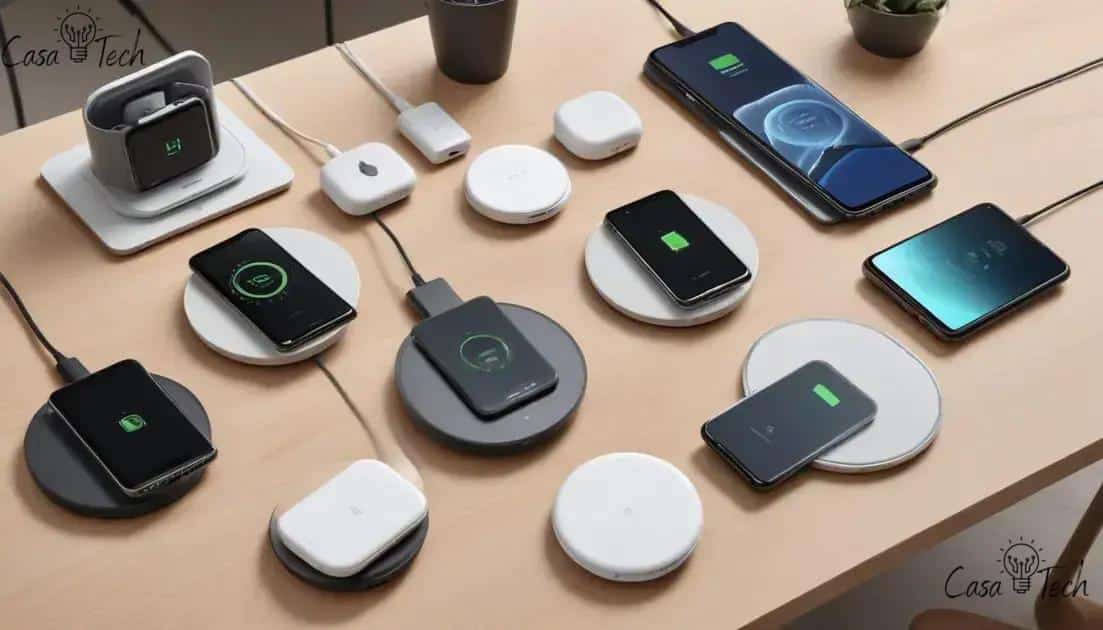
When exploring top wireless charging devices to consider, it’s essential to know what options are available on the market today. These devices can make your charging experience easier and more efficient.
One popular choice is the wireless charging pad. These pads come in various designs and sizes, making them suitable for different spaces. You simply place your compatible device on top, and it starts charging without any cables involved.
Here are a few models that stand out for their features and user satisfaction:
- Apple MagSafe Charger: This charger works seamlessly with iPhones, providing fast charging and a secure magnetic connection.
- Samsung Wireless Charger Duo: A versatile pad that charges two devices at once, such as your phone and Galaxy Watch.
- Anker Wireless Charging Pad: Known for its affordability and effectiveness, it is compatible with many devices and offers a non-slip design.
Another innovative option is the wireless charging stand. With these stands, you can charge your device while using it in a vertical position. This feature is particularly helpful for making video calls or watching videos.
Stylish Charging Stations
If you want something more stylish for your home, consider a multi-device charging station. These stations can charge several gadgets, including smartphones, smartwatches, and earbuds, all in one place. They are perfect for reducing clutter and keeping devices organized.
It’s also vital to check for features like fast charging and compatibility with various devices. Some chargers even include built-in fans to keep your devices cool during charging. Additionally, many chargers now come with safety features to prevent overheating and overcharging.
Choosing the right wireless charging device not only enhances convenience but also fits seamlessly into your lifestyle and decor.
How to set up your space for wireless charging
Setting up your space for wireless charging can enhance your experience and make the process smoother. A well-organized area not only ensures convenience but also promotes safety while charging your devices.
First, identify a suitable location for your wireless charger. It should be a flat, stable surface free from obstacles.
This spot can be on a desk, nightstand, or kitchen counter. Make sure the area has easy access to a power outlet.
Optimal Positioning
When placing your charger, be mindful of positioning. Ensure that the charging pad is aligned with the device’s charging coil. If you have multiple devices, consider using a larger charging pad or stand that can accommodate them all.
- Avoid Clutter: Keep the area clear of unnecessary items that might interfere with charging.
- Use Cables Wisely: If your charger has a cable, hide it neatly to maintain a tidy appearance.
- Consider Lighting: If using your charger at night, place it where it won’t be too bright but still accessible.
Another essential aspect is ensuring that your devices are compatible with wireless charging. Many modern smartphones and gadgets support this feature, but it’s always good to check. If not, consider purchasing a compatible case or adapter.
Safety Features
Safety is paramount when setting up your charging space. Ensure that the charger is on a non-flammable surface and away from liquids. Using chargers that have built-in safety features, like overheat protection, can provide peace of mind.
Lastly, keep an eye on any updates regarding your charging devices. Manufacturers often release firmware updates that can enhance performance and safety.
A few simple adjustments will create a comfortable and efficient space for wireless charging.
Common misconceptions about wireless charging
Addressing the common misconceptions about wireless charging is vital to help users understand this technology better.
Many people have misunderstandings that can lead to hesitations about adopting wireless chargers in their daily lives. One of the biggest myths is that wireless charging is much slower than wired charging.
While it may take a bit longer in some cases, many wireless chargers now support fast charging technologies. This means you can achieve comparable charging speeds with the right devices and chargers.
Efficiency of Wireless Charging
Another misconception is that wireless charging is inefficient and wastes a lot of energy. In reality, many modern wireless chargers have improved significantly in efficiency, with some reaching up to 80% or more. This means less energy is wasted during the charging process.
- Charging Speed: Many wireless chargers now allow for quick top-ups, reducing the gap between wired and wireless.
- Energy Efficiency: Advanced technology in wireless chargers ensures efficient power transfer, minimizing energy loss.
- Device Safety: Many users are concerned that wireless chargers may overheat devices, but most come equipped with safety features to prevent this.
Some people also believe that using wireless charging will damage their devices. However, this is not true if you use certified chargers. Most reputable brands have built-in mechanisms to protect your devices from overheating and overcharging.
Compatibility Concerns
Another common myth is that wireless charging only works with specific brands. While it’s true that some brands have their proprietary systems, most devices follow universal standards, like Qi.
This means that many smartphones and gadgets can charge on various wireless charging pads, regardless of the brand.
Lastly, many think that wiresless charging is only useful for smartphones. In fact, a variety of gadgets, including smartwatches, earbuds, and tablets, can also utilize this technology. By debunking these misconceptions, users can feel more confident in integrating wireless charging into their lives.
The future of wireless charging technology
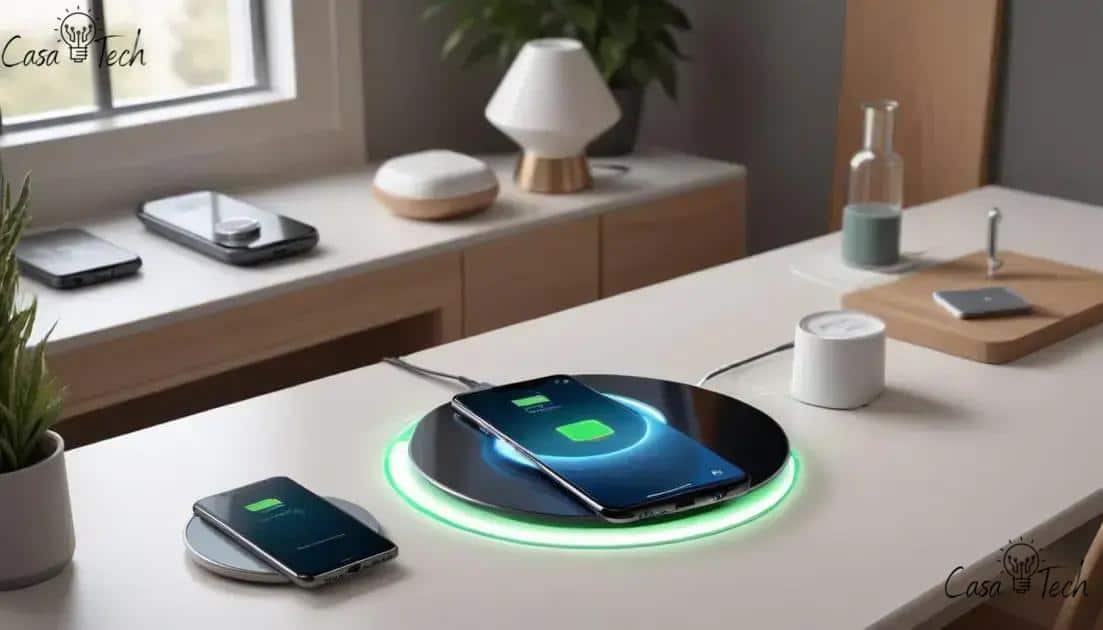
The future of wireless charging technology looks promising, with rapid advancements poised to enhance user experiences and expand its applications.
New innovations are being developed, making wireless charging more efficient and widespread.
One exciting development is the push for faster charging speeds. Future wireless chargers aim to reach parity with wired charging times, allowing users to get a quick power boost without needing to connect a cable.
New Standards and Compatibility
Another significant advancement is the introduction of new charging standards. These developments will contribute to broader compatibility among devices. Users will be able to charge various gadgets, from smartphones to tablets, with just one charger.
- Universal Compatibility: A single charger supporting multiple devices could greatly simplify charging.
- Increased Efficiency: Technologies like resonant charging may soon allow for greater energy transfer rates.
- Longer Distances: Future wireless charging might enable devices to charge from further away, reducing the need to place devices directly on the charger.
Moreover, as smart home technologies continue to evolve, we may see wireless charging integrated into everyday furniture.
Imagine a coffee table or desk that can charge your devices simply by placing them on the surface. This convenience will play a significant role in the adoption of wireless charging.
Environmental Considerations
Future advancements will likely focus on sustainability. As the world pays more attention to environmental issues, manufacturers are expected to develop eco-friendlier materials and processes for wireless chargers.
This shift will allow users to adopt this technology while being mindful of their carbon footprint. Developments in wireless charging technology are not just about speed and convenience.
They encompass enhancements in safety features to protect user devices, ensuring that this method of charging remains reliable. Innovations in safety could include better thermal management and improved foreign object detection.
FAQ – Common Questions About Wireless Charging Technology
What are the main benefits of wireless charging?
Wireless charging offers convenience, reduced clutter from cables, and compatibility with various devices. It also allows for safe and easy access to smartphones and other gadgets.
Is wireless charging slower than wired charging?
While wireless charging can be slightly slower, many modern wireless chargers support fast charging, making speeds comparable to wired options.
Can all devices use wireless charging?
Not all devices are compatible, but most modern smartphones and accessories support wireless charging, especially those that adhere to the Qi standard.
How can I set up my space for wireless charging?
To set up your space, choose a flat surface, keep it clutter-free, ensure easy access to a power outlet, and align your device properly on the charger.